


Most crickets showing up inside Arizona homes are Indian house crickets, a species that can breed and live out its whole life indoors, not just wander in from the yard. They’re mostly a nuisance rather than a hazard, though large numbers can chew through fabric and drywall. Tonight, cut off food and water, dim outdoor lights, and set out sticky traps near baseboards and doors.
TL;DR:
- Indian house crickets can breed and establish populations indoors, making exclusion alone ineffective for long-term control.
- Continuous chirping, presence of nymphs, and activity near water sources indicate active breeding within your home.
- Sealing gaps, reducing outdoor lighting, and removing moisture around water sources are crucial preventive measures.
- DIY methods such as vacuuming, sticky traps, and applying diatomaceous earth work for light to moderate infestations but not in severe cases.
- Professional treatment involving timing, targeted barrier sprays, and crack injections offers the most effective solution for established colonies.
Table of Contents
- Why You’re Seeing House Crickets in Arizona Right Now
- How to Identify Your Cricket and Spot an Indoor Infestation
- Assessing Severity and What to Do Tonight
- DIY Cricket Control That Actually Works
- Preventing Crickets From Coming Back
- When Pesticides or a Pro Make More Sense
- Arsenal Pest Control’s Take on Arizona Cricket Season
- Book a Cricket Inspection With Arsenal Pest Control
- Sources
Why You’re Seeing House Crickets in Arizona Right Now
Monsoon season pushes crickets toward buildings. Heavy rain floods burrows and outdoor cover, and the bugs move toward dry, sheltered spaces, which usually means your garage, stem wall, or laundry room. Arizona’s mild winters make things worse over time because cold snaps that would normally knock back outdoor populations elsewhere just don’t happen here with the same intensity.
Not every cricket problem is the same problem. Field crickets are seasonal visitors. They come in during monsoon or fall, hang around a few weeks, and die off or leave once conditions shift. Indian house crickets are different. According to University of Arizona Cooperative Extension research, this species can complete its entire life cycle indoors, which means exclusion alone won’t solve an established population.
A few signs point to an indoor breeder rather than a passing visitor:
- Crickets appearing consistently in the same rooms week after week, not just after a storm
- Small nymphs (juvenile crickets, wingless and pale) turning up alongside adults
- Chirping that continues steadily through the night rather than tapering off after a few days
- Activity concentrated near water sources like laundry rooms, bathrooms, or pet bowls
If you’re only seeing one or two crickets after a rainstorm, that’s a nuisance invader. If you’re seeing them every night for weeks, you likely have a breeding population.
How to Identify Your Cricket and Spot an Indoor Infestation
Indian house crickets run tan to light brown and are typically around the size of a small cricket, with wings that lie flat against a rounded body. Field crickets are darker, almost black, and noticeably chunkier. Females of both species carry a long, needle-like ovipositor at the rear end, which some homeowners mistake for a stinger. It isn’t one. It’s used to lay eggs into soil or, indoors, into damp potting mix or carpet backing.
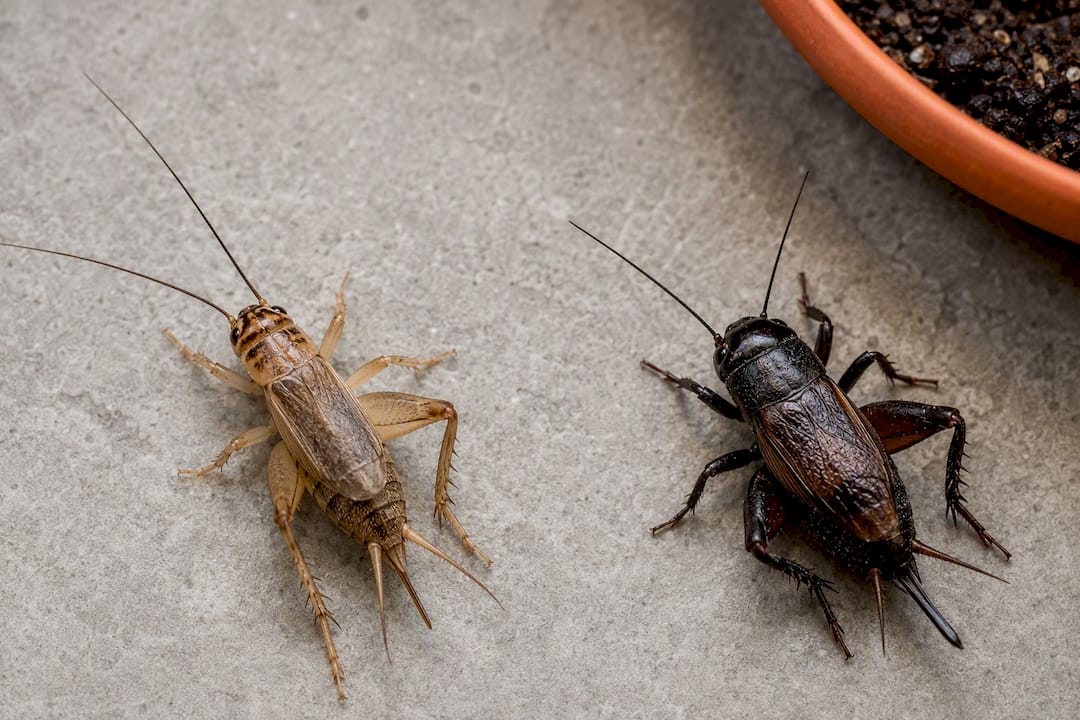
Chirping patterns help too. Field crickets tend to chirp in short bursts, especially around dusk. Indian house crickets chirp more continuously and are more likely to be heard from inside wall voids or under appliances rather than from the yard.
Common hiding spots:
- Gaps where the stem wall meets stucco or the foundation
- Cracks in expansion joints along the driveway or patio slab
- Behind and under potted plants, especially ones watered frequently
- Wall voids near plumbing penetrations and utility entry points
Watch for physical damage, not just noise. Crickets chew on natural fibers, so frayed carpet edges, small holes in clothing left on the floor, or nibbled cardboard boxes in storage are red flags. University of Arizona Extension notes that heavy populations can damage fabric, paper, and drywall, and their droppings and shed exoskeletons often draw in secondary pests looking for an easy meal.
Assessing Severity and What to Do Tonight
Start by checking the stem wall gap around your home’s exterior, along with any expansion joints in the concrete. If you see crickets clustered there rather than scattered singly, you’re likely dealing with a nesting site rather than a few wanderers. That gap can hide a surprisingly dense population, and surface-level spraying rarely reaches deep enough to matter.
For tonight, work through this order:
- Pick up pet food and water bowls after dark since standing water and kibble both draw crickets in.
- Switch off porch lights and any bright white bulbs near entry doors, or swap to warm amber bulbs if you have them on hand.
- Set sticky traps along baseboards, under sinks, and near door thresholds where crickets travel.
- Vacuum up any crickets you can see, along with droppings and shed skins, rather than just crushing them.
If you use diatomaceous earth or a bait product, keep it out of reach of kids and pets, and apply it into cracks and voids rather than leaving it exposed on open floors.
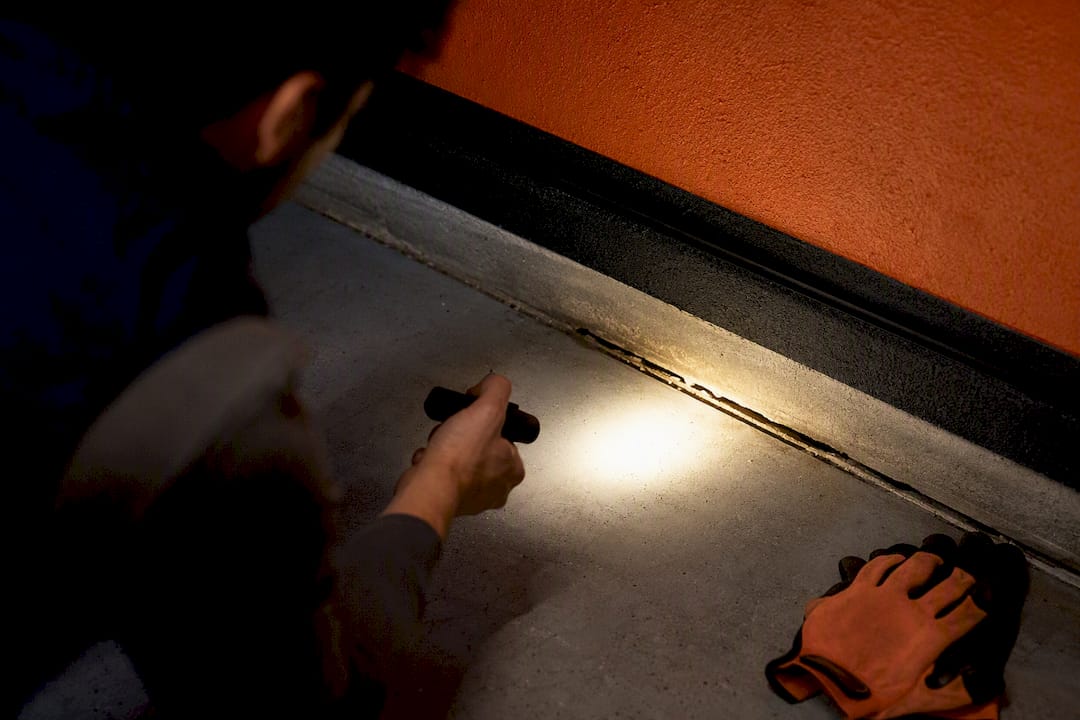
Pro Tip: Check the stem wall gap with a flashlight around 9 or 10 p.m. Crickets are most active after dark, so a nighttime check tells you far more about the size of the population than a daytime walk-through ever will.
DIY Cricket Control That Actually Works
Mechanical removal is your first line of defense and it costs nothing but time. Run a shop vacuum along baseboards, behind furniture, and inside closets where crickets tend to shelter during the day. Live-capture is straightforward: crickets are slow and don’t bite, so a cup and a piece of cardboard usually does the trick for the occasional straggler.
Sticky traps work best placed flat against walls in corners, under appliances, and along the paths crickets use between hiding spots and food or water. Check them every few days and replace once they’re covered in debris, since a trap loses most of its stickiness once it’s dusty.
- Vacuum visible crickets, droppings, and shed exoskeletons from closets, baseboards, and storage boxes.
- Place sticky traps in corners, under sinks, and near door thresholds.
- Apply diatomaceous earth into wall voids and crack-and-crevice gaps rather than dusting open surfaces, and wear a dust mask during application since Extension guidance points out that injecting DE into voids works far better than surface dusting and that inhaling the dust can irritate airways.
- Set out cricket-labeled bait stations along walls where you’ve seen the heaviest activity, and replace them per the label instructions.
Pro Tip: A dust mask isn’t optional with diatomaceous earth. The powder is fine enough to irritate your throat and lungs if you’re working in an enclosed void or crawlspace without one.
DIY methods handle light to moderate activity reasonably well. They tend to fall short once you’re finding dozens of crickets a night, or once you’ve confirmed a nesting site in the stem wall gap. At that point, you’re not managing a few strays, you’re managing a colony, and traps alone won’t reach it.
Preventing Crickets From Coming Back
Lighting is the single biggest driver of nighttime cricket traffic around Arizona homes. Crickets, like most nocturnal insects, are drawn to white and blue-toned light. Swapping porch and landscape lighting to yellow, amber, or sodium vapor bulbs cuts down on how many insects gather near your doors and windows in the first place, a change University of Arizona Extension lists as one of the most effective habitat changes homeowners can make.

Landscaping matters almost as much. Mulch, rocks, and dense vegetation sitting against the foundation give crickets cover and moisture right at your home’s weakest entry point. Pull that material back at least 12 inches from the foundation on every side.
Sealing gaps closes the door literally. Focus on:
- Door sweeps and weatherstripping around exterior doors, since worn seals are one of the easiest entry points to fix (this guide to winterizing doors covers the basics of sealing gaps around door frames)
- Plumbing penetrations under sinks and around water heaters
- Cracks in the foundation or stem wall, filled with caulk or expanding foam
Housekeeping rounds out the list. Store pet food in sealed containers, fix leaky faucets or AC condensation lines promptly, since crickets gravitate toward moisture, and inspect potted plants before bringing them indoors, since females sometimes lay eggs directly in damp soil.
Pro Tip: If you’ve got a stem wall gap that’s hard to seal completely, focus your lighting changes on that side of the house first. Less light there means fewer crickets showing up at the gap to begin with.
When Pesticides or a Pro Make More Sense
Over-the-counter perimeter sprays fail for a predictable reason: most homeowners apply them during the day or early evening, when cricket activity is still low, and they spray the visible perimeter while missing the void spaces where the real population lives. Licensed technicians apply residual sprays after 10:00 p.m. for a reason. That’s when crickets are most active and most likely to contact the treatment, according to Extension research on cricket management.
Timing within the season matters too. Early-summer applications target crickets while they’re still in the nymph stage, before they’ve matured and reproduced, and that window produces noticeably better long-term control than treatments applied later against established adult populations.
Professional treatment usually combines three approaches:
- Perimeter barrier treatments around the foundation to intercept crickets before entry
- Crack-and-crevice applications injected directly into stem wall gaps and expansion joints
- Targeted interior treatments in wall voids or under baseboards where nymphs are hiding
Before hiring anyone, ask about treatment scope, whether follow-up visits are included, and what products are safe around kids and pets.
Arsenal Pest Control’s Take on Arizona Cricket Season
We see the same pattern every monsoon season across Queen Creek, Gilbert, Chandler, and San Tan Valley: homeowners treat the visible crickets and ignore the stem wall gap, then wonder why the problem comes back in three weeks. An integrated approach, exclusion, lighting changes, and correctly timed treatment, consistently outperforms a single spray. We also lean on pet and kid safe products wherever a household needs them, because a cricket problem shouldn’t force a tradeoff with family safety.
— Arsenal Pest Control
Book a Cricket Inspection With Arsenal Pest Control
If you’ve spotted a nesting site in your stem wall gap or you’re past the point where traps and sealed doors are keeping up, a licensed inspection settles the question fast instead of guessing at it. Arsenal Pest Control serves Queen Creek, Gilbert, Chandler, Mesa, San Tan Valley, and the surrounding East Valley, and our cricket control service starts with identifying the species and locating breeding sites before we ever apply a single treatment.

A first visit typically covers a full inspection, species identification, a targeted treatment plan for the specific entry points and voids we find, and a follow-up to confirm the population is actually dropping, not just scattering. There’s no long-term contract required, and we offer pet and kid safe treatment options for households that need them. Have your address and a rough sense of where you’re seeing the most activity ready when you call, and check our full pest control services to get a quote scheduled.
Sources
For homeowners who want the technical detail behind this guidance, the University of Arizona Cooperative Extension’s cricket identification publication and its cricket management guide cover species biology and IPM timing in more depth.
- Crickets (University of Arizona Cooperative Extension)
- School & Home IPM Newsletter – October 2020 (University of Arizona)
Recommended
- Arizona Ant Infestation Identification Guide for Homeowners
- How to Get Rid of Scorpions: A Homeowner’s Guide
- Cricket Control in Queen Creek, AZ
