

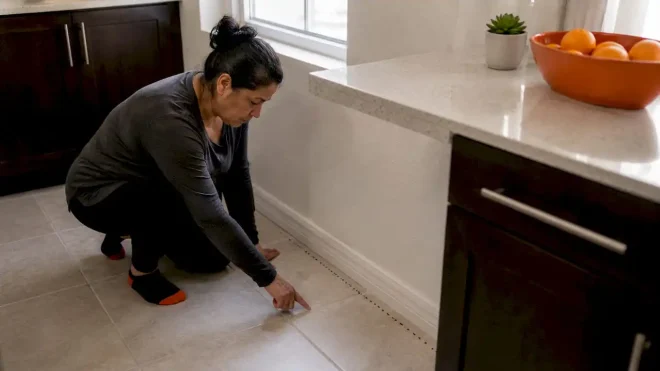
An ant infestation is defined as a colony of ants establishing a nesting site inside or immediately around your home, with workers actively foraging for food and water. Arizona homeowners face this problem year-round, but the desert heat drives ants indoors with particular urgency in late spring and summer. This ant infestation identification guide covers the physical signs, species traits, prevention steps, and control methods you need to manage the problem before it gets out of hand. Arsenal Pest Control serves communities across Queen Creek, Mesa, Gilbert, Chandler, Apache Junction, and surrounding areas, and the patterns we see repeat themselves in homes throughout the region.
What are the common signs of an ant infestation?
Recognizing an active infestation early is the single most effective thing you can do to limit damage and cost. The three primary signs of an infestation are visible ant trails, sawdust-like piles near wood, and soil deposits near your foundation. Each sign points to a different risk level and a different species.
Visible trails and foraging lines
Ants travel in consistent, repeating paths between their nest and a food or water source. You will see these trails along baseboards, countertops, window sills, and the edges of walls. A single scout ant is not a crisis. A steady line of workers moving in both directions is.
Frass and sawdust piles
Carpenter ants excavate wood to build galleries but do not eat it. They push the debris out, leaving sawdust-like frass near baseboards, window frames, or door jambs. This frass is a structural warning, not just a pest problem. Carpenter ants signal existing moisture or decay issues that require more than pest treatment alone.
Sounds inside walls
Faint rustling at night inside your walls is a strong indicator of a large carpenter ant colony. Many homeowners mistake this sound for the house settling. If you hear it consistently near wood framing or ceiling joists, treat it as urgent.
Odors and mounds
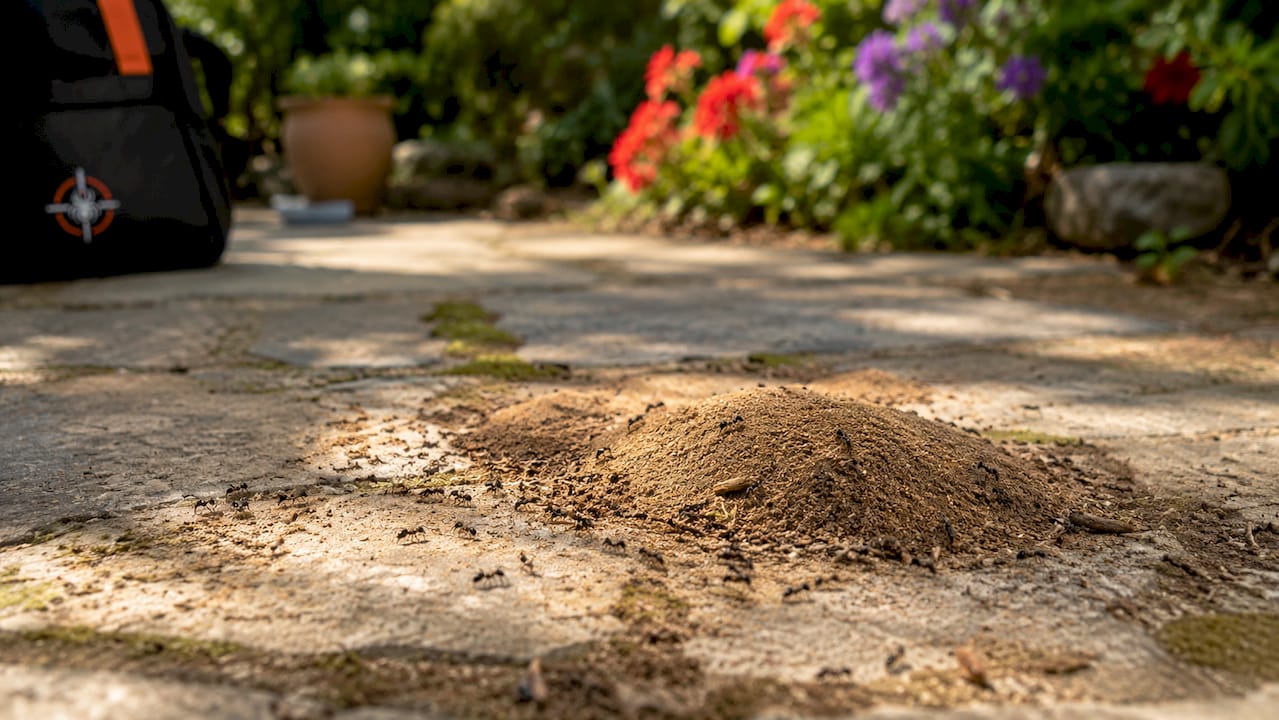
Odorous house ants release a rotten-coconut smell when crushed. If you notice that odor near your kitchen or bathroom, you have likely already disturbed a trail. Soil mounds near your foundation or in your yard signal ground-nesting species like fire ants.
Pro Tip: Press a white piece of paper against a suspected ant trail, then crush one ant and smell the paper. A rotten-coconut odor confirms odorous house ants. No smell likely means a different species, which changes your treatment approach.
One critical distinction: ants have a pinched waist, bent antennae, and three distinct body segments. Termites have a straight waist and straight antennae. Misidentifying the two leads to the wrong treatment and continued damage.
How can I identify the specific ant species in my Arizona home?
Species identification determines which treatment works. The physical traits, nesting behavior, and food preferences of each species differ enough that a one-size-fits-all approach consistently fails.
Key physical traits to examine
Look at body size, color, the number of nodes between the thorax and abdomen, and antenna shape. Nodes are the small bump-like segments at the ant’s waist. Fire ants have two nodes and a reddish-brown body. Carpenter ants are large, black or bicolored, and also have two nodes. Odorous house ants are small, dark brown, and have one node.
Pro Tip: Use your phone’s camera to zoom in on a captured ant placed on a white surface. You can count nodes and check antenna shape without a magnifying glass.
Common Arizona ant species at a glance
| Species | Size | Color | Nodes | Nesting site | Key behavior |
|---|---|---|---|---|---|
| Fire ant | Small to medium | Reddish-brown | 2 | Soil mounds in open areas | Aggressive, painful sting |
| Carpenter ant | Large | Black or bicolored | 2 | Moist or decayed wood | Excavates wood, produces frass |
| Odorous house ant | Small | Dark brown | 1 | Near heat and moisture | Rotten-coconut smell when crushed |
| Harvester ant | Medium to large | Red or brown | 2 | Large soil mounds | Clears vegetation around mound |
| Argentine ant | Small | Light to dark brown | 1 | Shallow soil, under debris | Forms massive supercolonies |
The smell test is a reliable, easy method for homeowners to identify odorous house ants without any equipment. For fire ants and carpenter ants, nesting location and body size are the fastest identifiers.
Carpenter ants deserve special attention. They excavate wood but do not consume it, which means their presence always signals an underlying moisture or structural decay problem. Treating the ants without fixing the moisture source guarantees the colony returns. A termite inspection is worth scheduling if you find carpenter ants, since both pests favor similar conditions and are frequently confused.
What steps can homeowners take to prevent ant infestations?
Prevention is cheaper and less disruptive than treatment. Arizona’s climate creates specific conditions that make homes vulnerable, particularly during the monsoon season when moisture increases and ants seek dry shelter.
Effective ant prevention combines sealing entry points, eliminating food and water sources, and managing the area immediately around your home. None of these steps alone is sufficient. All of them together create a real barrier.
- Seal cracks and gaps. Inspect your foundation, door frames, and window sills for gaps larger than 1/16 of an inch. Ants need very little space to enter. Use silicone caulk for small gaps and expanding foam for larger voids. Foundation cracks are one of the most overlooked entry points in Arizona homes.
- Trim vegetation away from the structure. Tree branches and shrubs touching your roofline or exterior walls act as highways for ants. Keep all vegetation at least 18 inches from the house. This single step eliminates a major access route for carpenter ants.
- Fix leaks and reduce moisture. Ants need water. A dripping pipe under the sink or a slow roof leak creates exactly the conditions carpenter ants and odorous house ants prefer. Fix leaks promptly and use a dehumidifier in crawl spaces if needed.
- Store food in airtight containers. Open bags of pet food, cereal, or sugar left on counters are reliable ant attractants. Transfer pantry staples to sealed glass or hard plastic containers. This applies to pet food bowls left out overnight.
- Clean consistently. Wipe counters after cooking, sweep crumbs from floors daily, and rinse recycling containers before storing them. Grease residue on stovetops is a particularly strong attractant for grease-loving species.
- Time your bait use correctly. Bait effectiveness shifts with the season. Protein-based baits work best in spring when colonies are building. Carbohydrate-based baits are more effective in summer and fall when colonies shift their nutritional focus.
Pro Tip: Place bait stations along active ant trails rather than near the nest entrance. Ants carry bait back to the colony, which is how it reaches the queen. Placing bait too close to the nest entrance causes ants to avoid it.
A broader pest prevention strategy for your home addresses the same conditions that attract ants, including moisture, food access, and structural gaps. Solving these issues protects against multiple pest types simultaneously.
How should I respond to an ongoing ant infestation?
The first instinct most homeowners have is to spray whatever is under the kitchen sink. That approach reliably makes the problem worse. Spraying household pesticides causes colonies to split through a process called budding, where a portion of the colony breaks off and forms a new nest elsewhere in your home. One infestation becomes two or three.
Effective management requires targeting the queen, not the workers you can see.
- Use slow-acting bait. Worker ants carry bait back to the nest and share it with the colony. Fast-acting pesticides kill workers before they return, leaving the queen and brood untouched.
- Match bait to species and season. Bait effectiveness is species-specific and changes with the time of year. Using the wrong bait produces no result and wastes time.
- Locate the nest before treating. Follow the ant trail to its source. Nests are often behind appliances, inside wall voids, under flooring, or in moist wood near plumbing.
- Call a professional when the nest is inaccessible. Wall voids, attic spaces, and subfloor areas require specialized equipment and treatments that are not available in retail products.
- Do not disturb fire ant mounds without a plan. Fire ants can be left alone if the mound does not pose a direct hazard, since native species play ecological roles. If the mound is near a play area or entryway, treat it with a mound drench or contact a professional.
The most common mistake homeowners make is treating the symptom instead of the source. Killing visible workers gives the impression of progress while the colony continues to grow underground or inside your walls. Effective ant control means reaching the queen. Everything else is temporary.
Signs that require professional intervention include recurring infestations after repeated DIY attempts, frass or rustling sounds inside walls, multiple new mounds appearing after treatment, and any infestation near electrical panels or HVAC systems.
Key Takeaways
Accurate species identification is the foundation of effective ant control. Treating the wrong species with the wrong bait at the wrong time of year produces no lasting result.
| Point | Details |
|---|---|
| Identify before treating | Match your treatment to the species using physical traits, smell, and nesting location. |
| Frass signals structural risk | Carpenter ant frass near wood means moisture or decay is present and needs repair. |
| Avoid spraying workers | Household sprays cause colony budding. Use slow-acting bait to reach the queen. |
| Seasonal bait timing matters | Use protein baits in spring and carbohydrate baits in summer and fall for best results. |
| Seal entry points first | Caulk foundation gaps and trim vegetation before applying any treatment. |
What we have learned from years of Arizona ant calls
After serving homeowners across Queen Creek, Mesa, Gilbert, Chandler, Apache Junction, and the surrounding communities, Arsenal Pest Control has seen one pattern repeat itself more than any other. Homeowners wait too long because they assume a few ants are normal. In Arizona, a few ants are often the visible edge of a colony that numbers in the tens of thousands.
The termite-versus-carpenter-ant confusion is genuinely costly. Homeowners who misidentify carpenter ants as termites sometimes skip the moisture repair that is the actual fix. Homeowners who misidentify termites as carpenter ants delay treatment until structural damage is severe. Distinguishing these two pests is one of the most practical skills an Arizona homeowner can develop.
Fire ants are worth a separate word. The instinct to pour boiling water or spray the mound immediately is understandable. But if the mound is not near foot traffic or a structure, leaving it alone is genuinely a reasonable option. Native fire ant species fill a real ecological role. The goal is not to eliminate every ant from your property. The goal is to keep them out of your home and away from areas where they pose a risk to people.
The misconception we correct most often is that more pesticide means better results. It does not. Targeted, species-specific treatment applied at the right time of year outperforms aggressive spraying every time.
— Arsenal Pest Control
Arsenal Pest Control’s ant control services for Arizona homes
Arizona’s ant species are diverse, and the treatment that works for odorous house ants in a Mesa kitchen is not the same treatment needed for carpenter ants in an Apache Junction crawl space.

Arsenal Pest Control provides ant removal services across Mesa, Queen Creek, Gilbert, Chandler, Apache Junction, and surrounding communities. Every treatment starts with a proper inspection to identify the species and locate the nest. Arsenal Pest Control uses environmentally responsible products with no long-term contracts required. If you are dealing with a recurring infestation or suspect carpenter ants near your home’s structure, the full range of pest control services includes targeted ant treatments, termite inspections, and structural assessments. Contact Arsenal Pest Control to schedule an inspection and get a treatment plan built for your specific situation.
FAQ
What are the first signs of an ant infestation?
The first signs are visible ant trails along baseboards or counters, soil mounds near your foundation, and sawdust-like frass near wood structures. A rotten-coconut odor in the kitchen also indicates odorous house ants.
How do I tell carpenter ants apart from termites?
Carpenter ants have a pinched waist, bent antennae, and three distinct body segments. Termites have a straight waist and straight antennae. Carpenter ants also produce frass, while termites produce mud tubes.
Why do ants keep coming back after I spray them?
Spraying worker ants causes the colony to split through budding, creating new nests. Slow-acting bait carried back to the queen is the only method that eliminates the colony at its source.
When is the best time to use ant bait in Arizona?
Use protein-based bait in spring when colonies are actively building. Switch to carbohydrate-based bait in summer and fall when colony nutritional needs shift. Matching bait type to the season significantly improves results.
Should I treat a fire ant mound myself?
If the mound is away from foot traffic and structures, leaving it alone is a reasonable option since native fire ants play an ecological role. If it poses a direct hazard, use a mound drench product or contact a licensed pest control professional for Queen Creek ant control.
Recommended
- Ant Removal in Apache Junction – Arsenal Exterminating Pest Control Services
- Ant Removal in Mesa – Arsenal Exterminating Pest Control Services
- Ant Removal in Coolidge – Arsenal Exterminating Pest Control Services
- Ant Removal in Sun Lakes – Arsenal Exterminating Pest Control Services
