



If you have rats, the single most effective first step is scheduling a professional inspection and exclusion assessment this week, not buying more traps. A licensed rat-control service will do what DIY methods almost never accomplish: map every entry point, identify the full extent of the colony, and seal the structure so new rats cannot replace the ones you remove. That combination of trapping plus exclusion plus sanitation is what actually ends an infestation.
Here is what a technician does on the first visit:
- Inspects the interior and exterior for droppings, grease rubs, gnaw marks, and active runways
- Identifies all entry points, including gaps as small as a quarter inch around pipes, vents, and rooflines
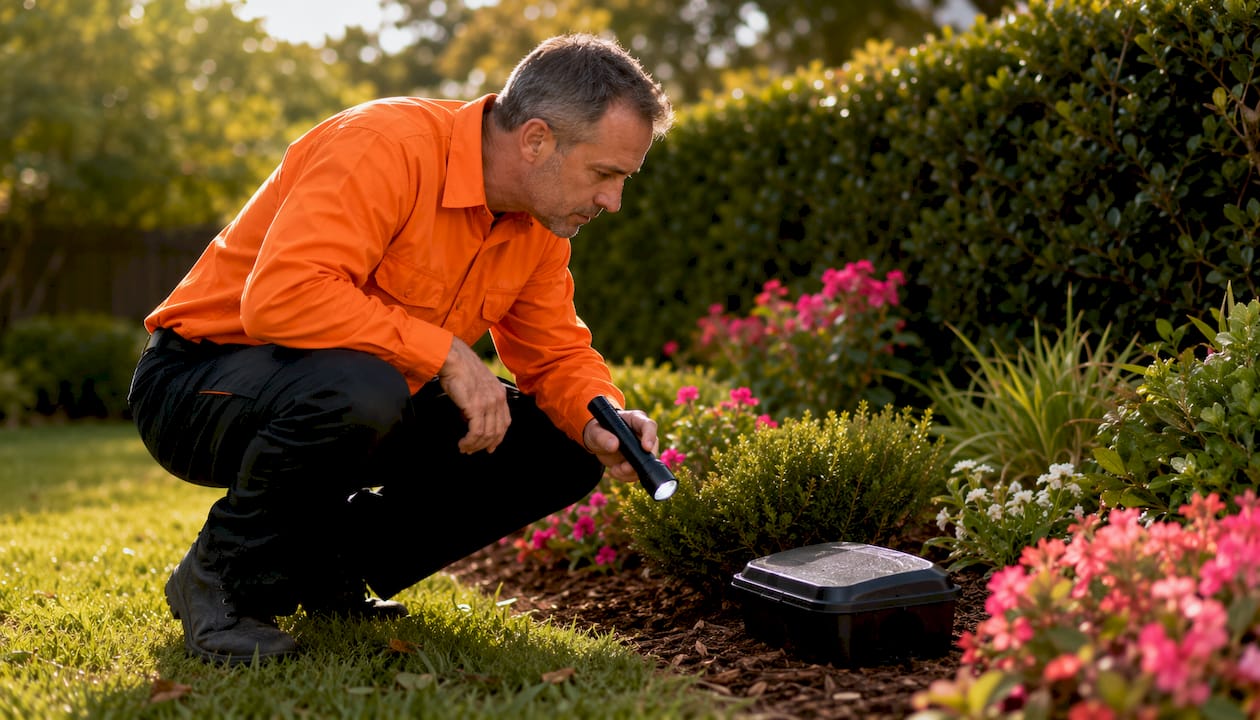
- Sets or pre-baits traps in high-activity zones and installs tamper-resistant bait stations where appropriate
- Builds an exclusion plan with specific materials and a cost estimate for sealing work
The next step is yours: call a licensed local provider and get an inspection scheduled. If you are in the Queen Creek, Gilbert, Mesa, or Chandler area, Arsenal Pest Control offers residential and commercial rat removal with follow-up guarantees and no long-term contracts.
Table of Contents
- What are the signs you have an active rat infestation?
- What do rat control services actually do, step by step?
- How much does professional rat control cost?
- How do you choose the right rat-control company?
- When DIY has failed and you need a professional now
- Key Takeaways
- What most rat-control advice gets wrong
- Arsenal Pest Control: licensed, local, and guaranteed
- Useful resources and further reading
What are the signs you have an active rat infestation?
Fresh droppings are the clearest indicator. Norway rat droppings are roughly 3/4 inch long, blunt at both ends, and dark when fresh. Roof rat droppings are smaller and pointed. Finding them in kitchen cabinets, along baseboards, or in the attic means rats are active there now, not weeks ago.
Grease rub marks are often overlooked but highly diagnostic. Rats travel the same routes repeatedly, and their oily fur leaves dark smears along walls, pipes, and joists. A fresh, shiny smear means the run is still active. Older smears are dull and dry.
Other high-confidence signs:
- Gnaw marks on wood, plastic, or electrical wiring, especially near food storage or utility penetrations
- Sounds in walls or the attic at night, typically scratching, scurrying, or gnawing between 11 PM and 4 AM
- Daytime sightings of a live rat, which usually indicate a large colony since subordinate rats get pushed out during daylight hours
- Nests made of shredded insulation, paper, or fabric found in attic corners, wall voids, or behind appliances
If you are hearing movement after multiple DIY trap attempts or finding fresh droppings daily, the infestation is almost certainly larger than it appears. A single breeding pair can produce dozens of offspring in a matter of months.
Call a professional immediately if you find fresh droppings near your electrical panel, HVAC system, or food prep areas. Chewed wiring is a fire hazard, and contaminated surfaces carry pathogens including Salmonella and Leptospira.
What do rat control services actually do, step by step?
Professional rodent removal is closer to a forensic investigation than a simple trap-and-bait job. Technicians map runs and entry points before placing a single trap, which is why the results are so different from random DIY placement.
Detailed inspection. The technician walks the full perimeter and interior, checking foundation gaps, roof-to-wall junctions, utility penetrations, and crawl spaces. They note every dropping cluster, grease rub, and gnaw mark to build a map of where rats are entering, traveling, and nesting. Species identification matters here: Norway rats burrow and stay low; roof rats climb and prefer attic spaces. Treatment strategy differs accordingly.
Targeted trapping and bait stations. Rather than scattering traps randomly, pros place them perpendicular to walls with the trigger facing the baseboard, exploiting rats’ thigmotactic behavior. Rats hug edges and avoid open spaces, so a trap set flush against a wall along an active runway catches far more than one placed in the middle of a room. When baiting is part of the plan, tamper-resistant bait stations with slow-acting rodenticides reduce bait shyness and protect children and pets from accidental exposure.
Exclusion and structural sealing. This is the step most DIY attempts skip entirely, and it is the reason infestations return. Rats squeeze through openings as small as a quarter inch, so effective exclusion targets every gap at that size or larger. Professionals avoid expanding foam and soft mesh because rats chew through both within days. Instead, they use a layered approach: stainless steel wool or wire mesh backed by heavy-duty exterior sealant, sometimes finished with a concrete cap on high-pressure points. The NPS Rodent Exclusion Manual calls this kind of mechanical proofing the most durable long-term strategy available.
Cleanup, sanitation guidance, and follow-up. After removal, the technician recommends sanitation changes: securing food in hard-sided containers, eliminating harborage like stacked cardboard or woodpiles near the structure, and addressing moisture sources. UC IPM guidance is direct on this point: without removing what attracted rats in the first place, any sealing or trapping is temporary. Follow-up visits confirm that traps are cleared, bait stations are active, and no new entry points have opened.
Pro Tip: Ask your technician about pre-baiting. Leaving traps unset with bait for several days before setting the trigger reduces neophobia, the rats’ instinctive wariness of new objects, and significantly raises capture rates. Most homeowners skip this step entirely.
How much does professional rat control cost?
Pricing varies based on infestation size, home square footage, number of entry points, and whether exclusion work is included. The table below reflects common nationwide ranges.
| Service Type | Typical Cost Range | Notes |
|---|---|---|
| Initial inspection | Free–$150 | Many companies waive with service booking |
| Trapping-only service | $200–$500 | Covers placement, monitoring, removal |
| Exclusion work | $300–$600 | Materials and labor for sealing entry points |
| Comprehensive package | $400–$800 | Inspection + trapping + exclusion + follow-up |
These industry pricing ranges represent averages. Commercial properties, multi-unit buildings, and homes with difficult-to-access crawl spaces or multiple structural penetrations will typically land at the higher end or above. Structural repairs beyond standard exclusion, such as replacing rotted soffits or damaged vent covers, are usually quoted separately.
Timeline: most residential infestations show a significant drop in activity shortly after trapping and exclusion. Full resolution, meaning no new signs of activity across consecutive follow-up visits, typically takes several weeks. A warranty covering re-entry through sealed points for 6–12 months is standard with reputable providers; always confirm in writing what the warranty excludes, specifically whether it covers failed workmanship or only new structural damage.

How do you choose the right rat-control company?
The difference between a company that solves the problem and one that just runs traps for a month comes down to a few specific criteria.
What to look for:
- Licensed and insured technicians (verify the state pest control license number before signing anything)
- Written inspection report detailing entry points found, species identified, and treatment plan
- Exclusion expertise, meaning the company seals gaps with chew-proof materials, not foam
- IPM (Integrated Pest Management) approach that prioritizes sanitation and source removal alongside trapping
- Clear warranty terms with scheduled follow-up visits included
Questions to ask on the phone:
- What materials do you use to seal entry points?
- Are your bait stations tamper-resistant and locked?
- Is the warranty for workmanship or just re-entry?
- How many follow-up visits are included, and what triggers an additional charge?
- Are treatments safe for pets and children, and how long should we stay out after treatment?
For households with kids or animals, it is worth reading up on safe treatment protocols before the technician arrives.
| Green Flag | Red Flag |
|---|---|
| Written inspection report provided | Verbal estimate only, nothing in writing |
| Exclusion work quoted with specific materials | Bait-only plan with no sealing proposed |
| Tamper-resistant, locked bait stations | Open bait trays placed near children’s areas |
| Follow-up visits included in warranty | “Call us if it comes back” with no scheduled return |
| Licensed and insured, verifiable | No license number provided on request |
| IPM approach: sanitation + exclusion + trapping | Immediate heavy pesticide application, no inspection |

Unlicensed operators are a genuine risk. Beyond the legal exposure, they often skip the exclusion work that prevents reinfestation, which means you pay again in six months.
When DIY has failed and you need a professional now
Most homeowners try at least one round of store-bought traps before calling a pro. That is reasonable for a single mouse. For rats, especially Norway rats or roof rats in an established colony, DIY almost always falls short.
The signs that DIY is insufficient are specific: persistent fresh droppings despite active traps, audible movement in walls or the attic after multiple trap cycles, evidence of gnawing on electrical wiring or structural wood, and any rat sighting during daylight hours. Chewed wiring is not just a property issue. It is a fire risk that warrants same-week professional attention.
For business owners, the calculus is different. A single confirmed rat sighting in a food-service or retail environment can trigger a health department inspection, and the liability from a failed DIY attempt is far greater than the cost of a licensed service. Commercial properties benefit from a dedicated rodent prevention strategy that includes monitoring stations and documented service logs.
The honest reason DIY pest control fails for established rat infestations is not the traps. It is the absence of exclusion. Without sealing entry points, every rat removed is replaced by another from outside.
Key Takeaways
Professional rat control works when it combines inspection, exclusion, sanitation, monitoring, and a written warranty — skipping any one of these steps leaves the door open for reinfestation.
| Point | Details |
|---|---|
| Exclusion is non-negotiable | Sealing gaps with chew-proof materials stops reinfestation; trapping alone does not. |
| Sanitation drives long-term results | Removing food sources and harborage converts a treated property from a target into a deterrent. |
| Cost ranges are predictable | Typical price ranges: inspection ($0–$150), trapping-only ($200–$500), exclusion work ($300–$600), comprehensive packages ($400–$800); always get exclusion materials specified in writing. |
| Red flags to avoid | No written report, bait-only plans, and unlicensed operators are the three biggest warning signs. |
| Arsenal Pest Control | Licensed, insured, and family-owned; serves Queen Creek, Gilbert, Mesa, Chandler, and surrounding Arizona communities with guaranteed rat removal and no long-term contracts. |
What most rat-control advice gets wrong
The pest control industry has a tendency to lead with the most visible part of the job: the traps, the bait stations, the technician in a truck. That is what customers see, and it is what most marketing emphasizes. But the part that actually determines whether an infestation ends permanently is the exclusion work, and it is also the part most likely to be underquoted, rushed, or skipped entirely.
Here is the uncomfortable truth: a company that runs traps for four weeks, clears the colony, and leaves without sealing entry points has not solved your problem. It has created a vacancy. Rats from neighboring properties will find the same gaps within weeks, sometimes days. The infestation looks resolved until it is not.
The second thing most guides understate is sanitation. Sealing a structure is necessary, but if the property still offers easy food access, open compost, unsecured pet food, or accessible garbage, it remains attractive. New rats will find new ways in, or exploit gaps the technician missed. UC IPM’s guidance on this is unambiguous: sanitation and source removal are the foundation, not an afterthought.
The best rat-control companies treat exclusion and sanitation as the primary deliverable and trapping as the interim step that makes the other two possible. Ask any company you are considering: “What specifically will you seal, with what materials, and what does the warranty cover if rats re-enter through a sealed point?” The answer tells you everything.
Arsenal Pest Control: licensed, local, and guaranteed
Rats in an Arizona home or business are not a wait-and-see problem. The heat drives them indoors, and the region’s construction style, with stucco exteriors, tile roofs, and active attic spaces, gives them plenty of entry points to exploit.

Arsenal Pest Control is a family-owned, licensed, and insured pest control company serving Queen Creek, San Tan Valley, Florence, Gilbert, Chandler, Mesa, Apache Junction, and surrounding communities. Every rat removal service includes a detailed inspection, targeted trapping, chew-proof exclusion work, and follow-up visits. There are no long-term contracts, and treatments are designed to be safe for families and pets. For households with specific safety concerns, the family safety guide covers exactly what to expect before, during, and after treatment.
To get started, visit the Arsenal services page to request a quote or schedule an inspection. Same-week appointments are typically available across the service area.
Useful resources and further reading
- UC IPM Rats Pest Note — University of California’s authoritative guide on rat biology, sanitation, exclusion, and IPM-based control
- NPS Rodent Exclusion Manual — National Park Service technical manual on mechanical rodent-proofing techniques and inspection schedules
- NPMA Pest World — National Pest Management Association consumer resources on rodent identification, health risks, and finding licensed professionals
- Arsenal Pest Control: Rat Removal, Queen Creek — Local service details, service area, and how to schedule a rat removal inspection in the East Valley
- How to Read a Pest Control Treatment Report — What to look for in an inspection report and how to hold your provider accountable to the warranty
- Commercial Rodent Prevention Strategies — Guidance for business owners on monitoring programs, documentation, and exclusion for commercial properties
Recommended
- Rat Removal Queen Creek, AZ | Rat Exterminator & Control
- Commercial Rodent Prevention Strategies for Business Properties – Arsenal Pest Control
- About Arsenal Exterminating, Eco-friendly Pest Control
- Pest Control in Queen Creek | Home & Commercial pest removal
