

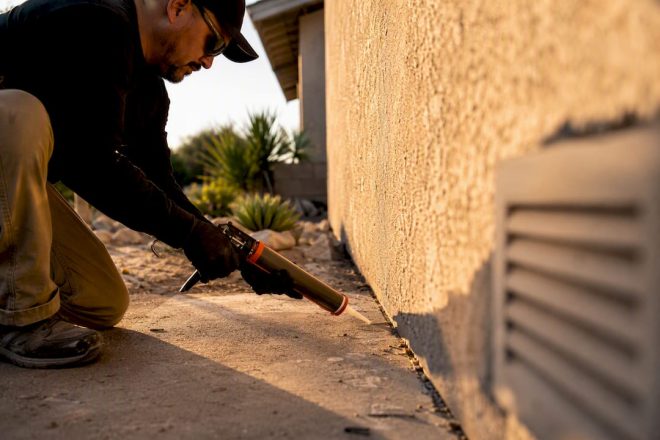
Scorpion proofing your house comes down to two things: sealing every gap a scorpion could squeeze through and removing the yard clutter that shelters them. Pesticides play a supporting role at best. Start this weekend by closing obvious gaps under doors, clearing woodpiles and rock piles away from the foundation, and running a UV-blacklight check after dark. A licensed pest control operator can handle the harder structural work and monitor results over time.
TL;DR:
- Sealing gaps under doors and caulking cracks around windows and utility entries are crucial, as scorpions can pass through openings as small as a credit card’s thickness.
- Removing yard clutter like woodpiles, rock stacks, and dense groundcover within 10 to 20 feet of the house significantly reduces scorpion habitat and shelter.
- Using a UV blacklight after dark allows homeowners to identify and target scorpions effectively, with sightings often decreasing after consistent night inspections.
- Pesticides serve only as supplementary defense and should be applied carefully around foundations or within wall voids, following safety guidelines for children and pets.
- Professional pest control is recommended when scorpions are frequent indoors, after DIY sealing efforts, or when vulnerable populations like children or the elderly are present.
Table of Contents
- Your Weekend Scorpion Proofing Checklist
- How Do You Seal Entry Points Against Scorpions?
- What Yard Changes Actually Reduce Scorpions?
- How Do You Check for Scorpions at Night?
- Why Pesticides Alone Won’t Solve the Problem
- When Should You Call a Scorpion Control Professional?
- Arsenal Pest Control’s Take on Scorpion Proofing
- Get Professional Help Sealing Your Home Against Scorpions
- Sources
Your Weekend Scorpion Proofing Checklist
You don’t need a full weekend to make real progress. Most of these tasks take an hour or two, and they hit the entry points and hiding spots scorpions rely on most.
- Install new door sweeps and replace worn weather stripping on all exterior doors.
- Clear debris, leaf litter, and woodpiles 10 to 20 feet from the foundation, a range. extension guidance backs as effective for cutting harborage near the house.
- Trim shrubs and groundcover back a sufficient distance from exterior walls, and cut any branches touching the roofline.
- Grab a UV blacklight after dusk and sweep the yard perimeter, garage, and patio. Scorpions glow bright blue-green under the beam, making them easy to spot.
- Shake out shoes and check towels or bedding left on the floor, especially in Arizona homes near desert lots.
How Do You Seal Entry Points Against Scorpions?
Scorpions can flatten their bodies to slip through gaps as small as a sixteenth of an inch, roughly the thickness of a credit card. Finding those gaps takes patience. At night, have someone hold a flashlight outside each exterior door while you watch from inside for light leaking through. Any visible sliver is a scorpion-sized doorway.
Work room by room and follow this sequence:
- Doors first. Install door sweeps on every exterior door, including the garage entry and side doors. Replace cracked or gapped weather stripping around the frame.
- Windows next. Repair torn screens and caulk gaps where the frame meets stucco or siding. Use silicone or latex caulk for cracks under a quarter inch; for anything wider, pack backer rod into the gap first, then caulk over it.
- Foundation and weep holes. Stucco and hollow-block walls often have weep holes for drainage. Texas A&M Extension recommends screening these with copper mesh or fine steel wool instead of sealing them shut entirely, since blocking drainage can cause moisture problems.
- Plumbing and utility penetrations. Seal around pipes, cable lines, and AC conduit where they enter the house, both at the foundation and in the attic.
- Garage doors. Add a bottom seal if the existing one has gaps or has hardened with age.
Avoid expanding spray foam on exterior gaps. It looks like a quick fix, but it degrades in UV light, cracks over a season or two, and often leaves hidden channels once it shrinks.
Pro Tip: Check crawlspace vents and attic gable vents while you’re at it. Scorpions climb far better than most homeowners assume, and an unscreened attic vent is just as much an open door as a gap under the kitchen slider.
Walk the exterior twice a year, ideally before the spring warm-up and again before monsoon season, and recaulk anywhere sealant has pulled away from the substrate.
What Yard Changes Actually Reduce Scorpions?
Sealing the house solves half the problem. The other half is removing the places scorpions live and hunt in the first place. University of Arizona Cooperative Extension notes that irrigated landscapes with abundant insect prey draw scorpions in, so the goal is making your yard less hospitable, not just less accessible.
- Elevate woodpiles on racks instead of stacking directly on the ground, and keep them away from the house.
- Remove loose rock piles, stacked bricks, and stray lumber that create hollow spaces underneath.
- Store trash cans and recycling bins off bare ground, on a concrete pad if possible.
- Keep a 10 to 20 foot clear zone around the foundation free of dense groundcover.
- Prune shrubs and vines back 24 inches from exterior walls so nothing bridges the gap between plant and stucco.
Irrigation matters more than most homeowners realize. Overwatering near the foundation creates a moist microclimate that attracts both scorpions and the insects they eat. Switching to drip irrigation aimed away from the wall line, and choosing drought-tolerant groundcover instead of thirsty turf, cuts that draw significantly. A low-maintenance landscaping plan built around native, low-water plants does double duty: less yard work and fewer scorpion-friendly hiding spots.
How Do You Check for Scorpions at Night?
A UV blacklight is the single most useful tool a homeowner can own for this. Scorpions fluoresce a vivid blue-green under UV light, a trait UC ANR’s pest management program points to as one of the most reliable inspection methods available. Walk the yard and house perimeter about 30 to 45 minutes after dark, when scorpions are most active.
Check these spots first:
- Along the base of exterior walls and near AC units
- Inside garages, especially near stored boxes and along baseboards
- Bathrooms, closets, and behind large appliances indoors
- Attics and crawlspaces if you have access
Repeating this survey three to four times across the active season can noticeably reduce localized populations, often more than repeated spraying alone. Keep a simple log of where and how many you find each time to track whether your sealing work is holding up.
If you spot one indoors, don’t grab it bare-handed. Use long forceps or tongs to drop it into a smooth-sided jar. Most stings cause pain and swelling similar to a bee sting, but seek medical attention immediately for a child, an elderly person, or anyone showing numbness, muscle twitching, or difficulty breathing.

Why Pesticides Alone Won’t Solve the Problem
No pesticide product eliminates scorpions outright, a point University of Arizona Cooperative Extension makes plainly in its guidance. Sprays kill what they contact at the moment of application, but scorpions hiding in wall voids or under debris piles never get touched. Treat chemicals as backup, not the plan.
Where a targeted application makes sense:
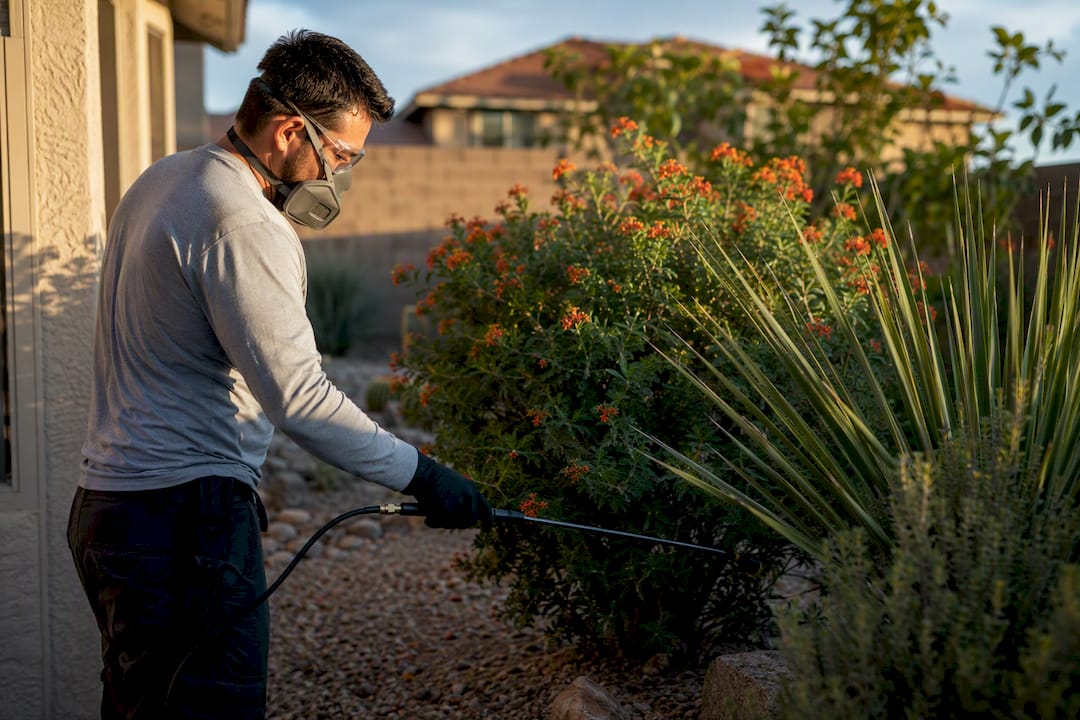
- A perimeter band along the foundation, typically up to one foot up the wall and 3 to 4 feet out on the ground, following label directions exactly.
- Dust formulations in wall voids or weep holes where exclusion alone can’t reach.
Common active ingredients include pyrethroids like bifenthrin and deltamethrin. Keep pets and small children away from treated surfaces until the product dries completely, and always follow label reentry intervals.
Pro Tip: If you have young kids or pets that spend time in the yard, ask your pest control provider about pet-safe formulations and application timing rather than defaulting to the broadest spray they offer.
When Should You Call a Scorpion Control Professional?
Some situations call for more than DIY sealing and yard cleanup. Consider hiring a licensed operator if:
- You’re finding scorpions indoors regularly, not just the occasional yard sighting.
- Your household includes young children, elderly residents, or anyone with a known sting sensitivity.
- You’ve recently moved into new construction, where nearby earth disturbance often pushes displaced scorpions toward the nearest structure.
- You’ve done the sealing work yourself and sightings haven’t dropped.
A professional visit should include a full exterior and interior inspection, structural exclusion work like weep hole screening, targeted treatment where warranted, and a follow-up plan. Before booking, ask about license and insurance status, what products they use around kids and pets, and whether the service includes a callback guarantee if scorpions return.
Arsenal Pest Control’s Take on Scorpion Proofing
Arsenal Pest Control has spent years treating homes across Queen Creek, San Tan Valley, Gilbert, and the wider East Valley, and the pattern holds everywhere: houses that skip exclusion and lean only on spraying keep calling back. We lead with sealing and habitat changes because that’s what actually holds up between visits, and we back it with pet-safe treatment options so families don’t have to choose between results and safety.
— Arsenal Pest Control
Get Professional Help Sealing Your Home Against Scorpions
Sealing your own doors and clearing your own yard gets you most of the way there. What most homeowners can’t do themselves is screen every weep hole, reach the wall voids where scorpions actually nest, or know which gaps on stucco and hollow-block construction matter most. That’s the gap Arsenal Pest Control fills.

Our scorpion control service starts with a full inspection, moves into structural exclusion work like mesh screening and targeted sealing, and includes pet-safe treatment options where they’re actually needed, not as a default. If you’ve already handled the basics from this guide and sightings haven’t slowed, or if you’d rather skip straight to a licensed inspection, book a visit through our pest control services page and we’ll take it from there.
Sources
For deeper technical detail, University of Arizona Cooperative Extension covers full-home pest-proofing methods, while Texas A&M Extension details structural sealing materials and application ranges for perimeter treatments.
- Scorpions (University of Arizona Cooperative Extension)
- Living with and managing scorpions (ACIS/University of Arizona IPM newsletter)
- Scorpions (UC ANR Integrated Pest Management)
- Scorpions (Texas A&M Extension)
Recommended
- How to Get Rid of Scorpions: A Homeowner’s Guide
- Arizona Bark Scorpion Control for Arizona Homeowners
- Scorpion Control in Queen Creek, AZ
- How to Prepare Your Home for a Pest Inspection
