


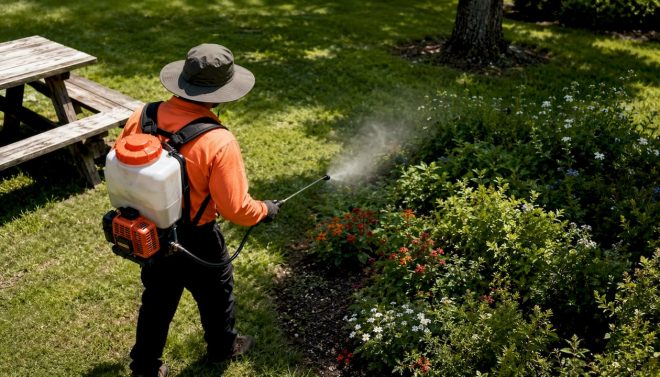
Yes, hiring a licensed mosquito spraying service is worth it when mosquitoes are keeping you off your own patio or when disease risk is a real concern in your area. Professional barrier sprays target mosquito resting sites in vegetation, fence lines, and shaded areas and typically deliver 3–4 weeks of residual control under normal conditions. That’s population reduction, not total elimination, but most homeowners notice a meaningful drop in bites within hours of treatment. For homeowners in Queen Creek, San Tan Valley, Gilbert, Chandler, Mesa, Apache Junction, and Florence, Arsenal Pest Control offers licensed, pet-safe mosquito control with no long-term contracts required.
Table of Contents
- What does a mosquito spraying service actually do?
- What to expect during a typical mosquito spray visit
- How much does mosquito spraying cost?
- One-time treatment vs. seasonal plan: how often do you need spraying?
- How to choose a mosquito spraying service
- What happens on service day and how to handle aftercare
- Why IPM and larval control beat routine spraying every time
- Arsenal Pest Control mosquito services in Queen Creek and the East Valley
- Key Takeaways
- The Arsenal Pest Control team’s take on mosquito control
- Authoritative sources and further reading
What does a mosquito spraying service actually do?
Professional mosquito control isn’t one-size-fits-all. Technicians choose from several treatment types depending on your yard, your mosquito pressure, and whether you have active breeding sites on the property.
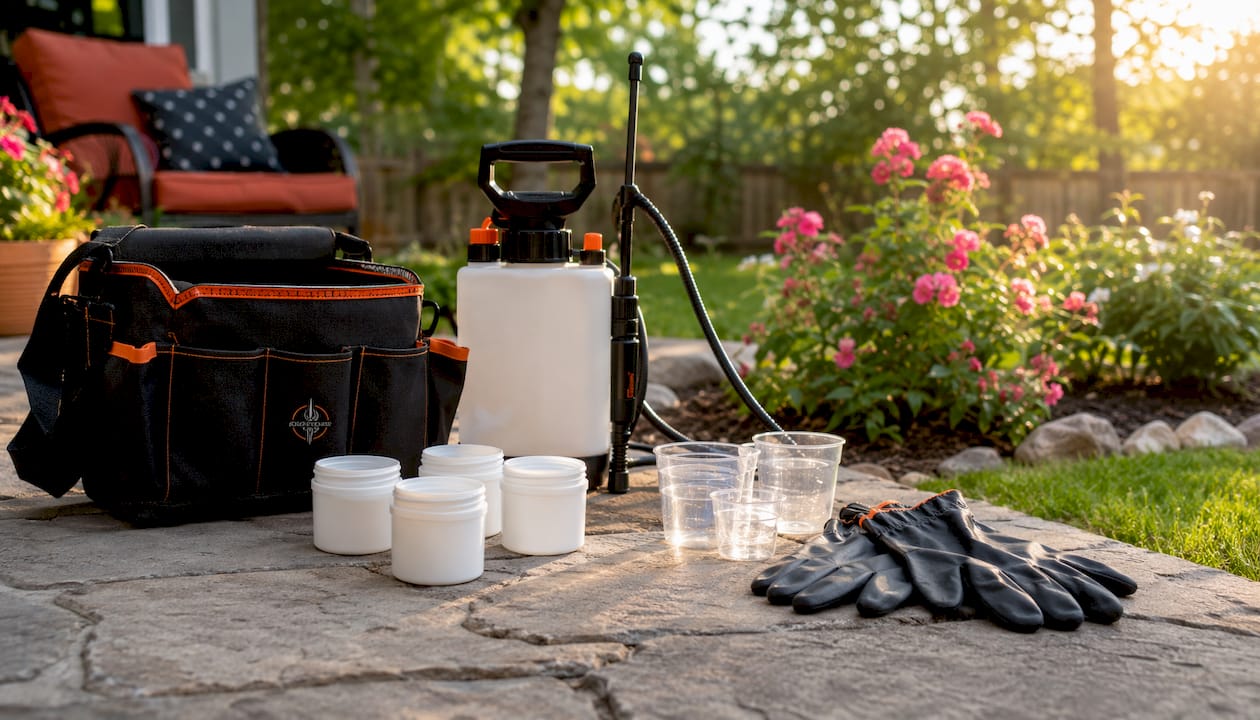
Barrier sprays are the most common residential option. A licensed technician uses a backpack sprayer to apply a pyrethroid-based product to resting sites: undersides of leaves, dense shrubs, shaded fence lines, and the base of structures. The goal is to kill mosquitoes where they rest during the day, not to blanket your entire lawn. Treating open, sunny turf adds little protection and wastes product.
ULV fogging (ultra-low volume) is what you see from municipal trucks at dusk. It aerosolizes insecticide into a fine mist that kills flying mosquitoes on contact. According to the EPA’s adulticide guidance, ULV applications involve less than 3 ounces of active ingredient per acre. Private companies occasionally offer fogging for large events, but it provides no residual protection and is better suited to community-scale operations.
Larval control with Bti (Bacillus thuringiensis israelensis) targets mosquito larvae in standing water before they ever become biting adults. Bti is a naturally occurring bacterium that is effective for standing water such as ponds, rain barrels, and drainage areas, and it poses no meaningful risk to non-target species. Combining Bti with targeted barrier sprays produces better long-term results than adulticide alone.
Special-event and one-time treatments are barrier sprays scheduled before a backyard party or outdoor gathering. They cost more per visit than a seasonal plan but make sense when you need a single window of relief.
Natural and reduced-risk products (essential-oil-based formulas, for example) are available from some providers. They tend to have shorter residual windows than pyrethroids, often under two weeks, and may cost slightly more per application. Worth asking about if you have strong concerns about synthetic chemistry.

| Treatment Type | Best For | Residual Life | Ecological Trade-off |
|---|---|---|---|
| Barrier spray (pyrethroid) | Season-long yard control | 3–4 weeks | Pollinator risk if misapplied |
| ULV fogging | Large events, community-scale | Hours only | Low residue, no lasting protection |
| Bti larval control | Standing water, breeding sites | Weeks (per application) | Minimal; targets larvae specifically |
| Natural/reduced-risk spray | Sensitive households, short-term | under two weeks | Lower ecological impact |
| Special-event spray | One-time outdoor gatherings | 3–4 weeks | Same as barrier spray |
What to expect during a typical mosquito spray visit
A standard residential visit runs about 20–40 minutes for an average yard. Here’s how it typically unfolds.
The technician starts with a quick inspection: checking for standing water, assessing vegetation density, and identifying the shaded zones where mosquitoes rest. That walkthrough shapes where the product goes.
Application focuses on resting habitat, not open grass. Technicians work the undersides of leaves, low ground cover, shrubs, under decks, and along fence lines. A backpack sprayer gives them the precision to hit those spots without over-treating.

What you’ll notice afterward: dead mosquitoes on surfaces within hours, and a noticeable drop in biting activity. The treatment doesn’t create a force field, but it hits the population hard at its resting points.
Before the technician arrives, you should:
- Remove or cover outdoor food, grills, and pet water bowls
- Bring children’s toys and pet items inside
- Close windows near treated vegetation
- Secure pets and keep children indoors during the application
Re-entry is typically safe 30–60 minutes after application, once the product has dried. Avoid running irrigation or watering treated areas for at least a few hours after treatment to preserve the residual.
How much does mosquito spraying cost?
Pricing varies by region, yard size, and treatment type, so treat any number here as a planning range rather than a firm quote.
One-time treatments typically cost more per visit than recurring plans because the company absorbs setup and mobilization costs without the volume of a seasonal program. Expect to pay a premium for event sprays with short scheduling windows.
Seasonal plans spread cost across multiple visits, usually every 3–4 weeks through peak mosquito season. Per-visit pricing under a plan is meaningfully lower than one-off rates, which is why most homeowners with consistent pressure find them the better value.
What drives price up or down:
- Yard size and vegetation density (more resting habitat = more product and time)
- Geographic mosquito pressure (Arizona’s monsoon season creates intense, concentrated pressure)
- Treatment type (Bti larval treatments add cost but reduce adulticide frequency)
- Add-on services like tick control or special-event scheduling
- Whether an on-site inspection is required before quoting
Pro Tip: When you call for a quote, have your approximate lot size, a rough count of standing-water sources (bird baths, planters, low spots), and whether you’ve had prior treatments ready. A company that quotes without asking any of these questions is likely giving you a generic price, not an accurate one.
One-time treatment vs. seasonal plan: how often do you need spraying?
Barrier sprays last 3–4 weeks under normal conditions. Rain and irrigation can shorten that window, sometimes significantly, which is why a single treatment rarely carries you through an entire mosquito season.
A one-time treatment makes sense when:
- You’re hosting a specific outdoor event
- You’ve had a temporary spike (a neighbor’s standing water, post-storm breeding surge)
- You want to test the service before committing to a program
Recurring seasonal service makes more sense when:
- Mosquitoes consistently limit your outdoor time from spring through fall
- You have standing water sources that are hard to eliminate (drainage areas, irrigation runoff)
- You live in an area with documented disease transmission risk
| Scenario | Recommended Frequency | Notes |
|---|---|---|
| Low pressure / one-time event | Single treatment | Re-evaluate after 3–4 weeks |
| Moderate pressure / occasional nuisance | every 3–4 weeks during season | Adjust after heavy rain |
| High pressure / standing water present | Every 3 weeks during season | Add Bti for breeding sites |
| Post-storm or irrigation spike | Unscheduled re-treatment | Confirm with provider |
For seasonal pest programs on commercial properties, the same 3–4 week interval applies, with adjustments for irrigation schedules and site-specific breeding pressure.
How to choose a mosquito spraying service
The difference between a good provider and a bad one often comes down to three things: licensing, transparency about products, and willingness to discuss safety.
Ask every provider these questions before booking:
- Do your technicians hold a state pesticide applicator license?
- What active ingredients do you use, and are they EPA-registered?
- Do you include larval treatments (Bti) in your program?
- What are the re-entry times, and will you provide written instructions?
- Do you offer a satisfaction guarantee or free re-treatments?
- Are your treatments safe for pets and children when dry?
Red flags to watch for:
- Refuses to name active ingredients or share product labels
- Pushes an automated misting system as the primary solution
- Requires a long-term contract with no opt-out
- Quotes a price without asking about yard size or standing water
- No mention of re-entry times or safety precautions
Trust signals that matter: a current state pesticide applicator license, proof of insurance, EPA-registered products, written re-entry instructions, and verifiable local reviews. Licensed technicians follow label dilution rates and target resting zones precisely, which reduces over-application risk compared with DIY methods.
Pro Tip: Ask specifically whether the company’s program includes source reduction advice. A provider who only talks about spraying and never mentions eliminating standing water is selling you a recurring chemical dependency, not a solution.
What happens on service day and how to handle aftercare
Day-of preparation takes about ten minutes and makes a real difference in both safety and treatment effectiveness.
Before the technician arrives:
- Secure all pets indoors and keep children inside until re-entry is confirmed
- Cover outdoor furniture cushions, grills, and any food items
- Move pet bowls, bird feeders, and children’s toys inside
- Close windows and sliding doors adjacent to treated vegetation
The technician will work the perimeter of your yard, focusing on resting sites: fence lines, under decks, low shrubs, and the shaded base of structures. They won’t spray open lawn. Most visits wrap up in 20–40 minutes.
After the treatment:
- Wait 30–60 minutes before allowing re-entry, or until surfaces are visibly dry
- Hold off on watering or running irrigation for a few hours
- Expect to see dead mosquitoes on hard surfaces shortly after treatment
- Ask the technician for written documentation of what was applied and when
For households with young children or pets, the family-safe pest treatment guide from Arsenal Pest Control covers additional precautions worth reviewing before your first visit.
Why IPM and larval control beat routine spraying every time
The EPA discourages automated residential misting systems because they release insecticide on a timer, regardless of actual mosquito activity. That’s routine chemical exposure with no evidence of long-term effectiveness. Integrated Pest Management (IPM) takes the opposite approach: target the right life stage, in the right place, at the right time.
Bti larviciding is the clearest example of IPM done right. It kills larvae in standing water before they become biting adults, and it does so without meaningful risk to beneficial insects. Combining Bti with targeted barrier sprays reduces how much adulticide you need over a season.
The pollinator risk from barrier sprays is real and worth understanding. Peer-reviewed research published in Stacks Journal found average insecticide loads of 1,563.6 ng/g in yards directly treated by private barrier sprays, compared with 28.6 ng/g in neighboring yards and 7.3 ng/g in yards treated by mosquito control districts. The average pyrethroid risk quotient for directly sprayed yards was 6.6, meaning residues exceeded the honey bee LD50 by more than six times on average.
Mitigation is straightforward: avoid treating flowering plants during applications, schedule treatments outside peak pollinator hours (early morning or evening), and prioritize Bti for any standing water on the property. These steps don’t eliminate the trade-off, but they reduce it substantially.
Pro Tip: Do a five-minute standing-water check every week during mosquito season. Dump and scrub bird baths, check saucers under potted plants, and clear clogged gutters. Every breeding site you eliminate is one less reason to spray.
Arsenal Pest Control mosquito services in Queen Creek and the East Valley
Reclaiming your yard from mosquitoes shouldn’t require a long-term contract or a guessing game about what’s being sprayed on your property.

Arsenal Pest Control is a family-owned, licensed provider serving Queen Creek, San Tan Valley, Gilbert, Chandler, Mesa, Apache Junction, Florence, and surrounding East Valley communities. Mosquito services include one-time event sprays, recurring seasonal programs, and Bti larval treatments for standing water. All treatments use EPA-registered products applied by licensed technicians, with written re-entry guidance provided after every visit. Pet- and kid-safe protocols are standard, not an add-on. No long-term contracts are required.
View Arsenal’s full pest control services or go directly to the Queen Creek mosquito control page to request a quote or schedule your first visit.
Key Takeaways
Professional mosquito spraying reduces biting populations by targeting resting sites with barrier sprays and breeding sites with Bti larvicide, delivering 3–4 weeks of residual control per treatment.
| Point | Details |
|---|---|
| Realistic expectations | Spraying reduces mosquito populations significantly but does not eliminate them; combine with source removal for best results. |
| Treatment frequency | Barrier sprays last 3–4 weeks under normal conditions; recurring visits every 3–4 weeks are standard during peak season. |
| Vetting a provider | Confirm a state pesticide applicator license, EPA-registered products, written re-entry instructions, and a satisfaction guarantee. |
| Pollinator risk | Private barrier sprays carry measurable pollinator risk; mitigate by timing treatments outside peak pollinator hours and prioritizing Bti. |
| Arsenal Pest Control | Licensed, family-owned service in Queen Creek and the East Valley with no long-term contracts and pet-safe treatment options. |
The Arsenal Pest Control team’s take on mosquito control
Mosquito season in the East Valley hits fast, especially once the monsoons arrive and standing water appears overnight. What we’ve seen over years of serving Queen Creek and surrounding communities is that homeowners who get the best results aren’t just spraying on a schedule. They’re pairing professional treatments with weekly standing-water checks and asking their technician real questions about what’s being applied and why.
We’re proud to serve families across Queen Creek, San Tan Valley, Gilbert, Chandler, Mesa, Apache Junction, and Florence with treatments that are honest about what they do and careful about how they do it. If you want a no-obligation conversation about your property, we’re easy to reach.
Authoritative sources and further reading
- EPA: Mosquito Misting Systems — EPA guidance on why automated residential misting systems are discouraged and why IPM, including Bti larval control, is the preferred framework.
- EPA: Pesticides Used to Control Adult Mosquitoes — Overview of EPA-registered adulticides, ULV application methods, and safety standards for residential and community mosquito control.
- Anderson et al. (2025), Stacks Journal: Pollinator Risk from Residential Mosquito Control — Peer-reviewed study measuring pyrethroid residues and honey bee risk quotients in yards treated by private barrier spray companies versus mosquito control districts; foundational for understanding ecological trade-offs.
- EPA: Naled for Mosquito Control — Detailed guidance on aerial ULV applications, safety precautions for families, and recommended steps before and after community spraying events.
Recommended
- Mosquito Control in Queen Creek – Arsenal Pest Control
- About Arsenal Exterminating, Eco-friendly Pest Control
- Pest Control & Extermination | Arsenal Exterminating
- Pest Control Services Queen Creek, AZ | Arsenal Exterminating
