


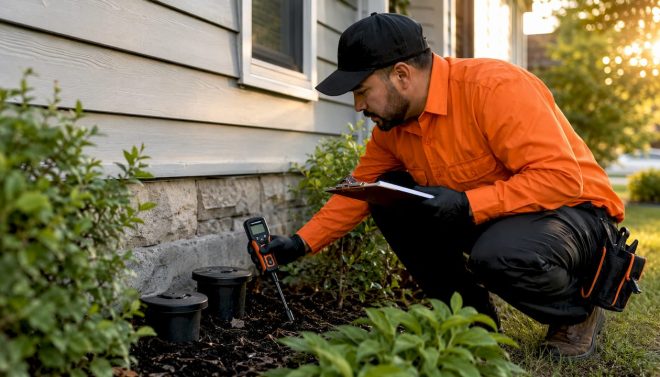
What is termiticide and why does your home need it?
Termiticide is a pesticide specifically formulated to prevent, destroy, or repel termites. Before any termiticide reaches the market, the US EPA requires it to demonstrate at least five years of efficacy in structural protection. That bar exists because termites cause billions of dollars in structural damage across the United States every year, and a product that fails after one season is worse than useless.
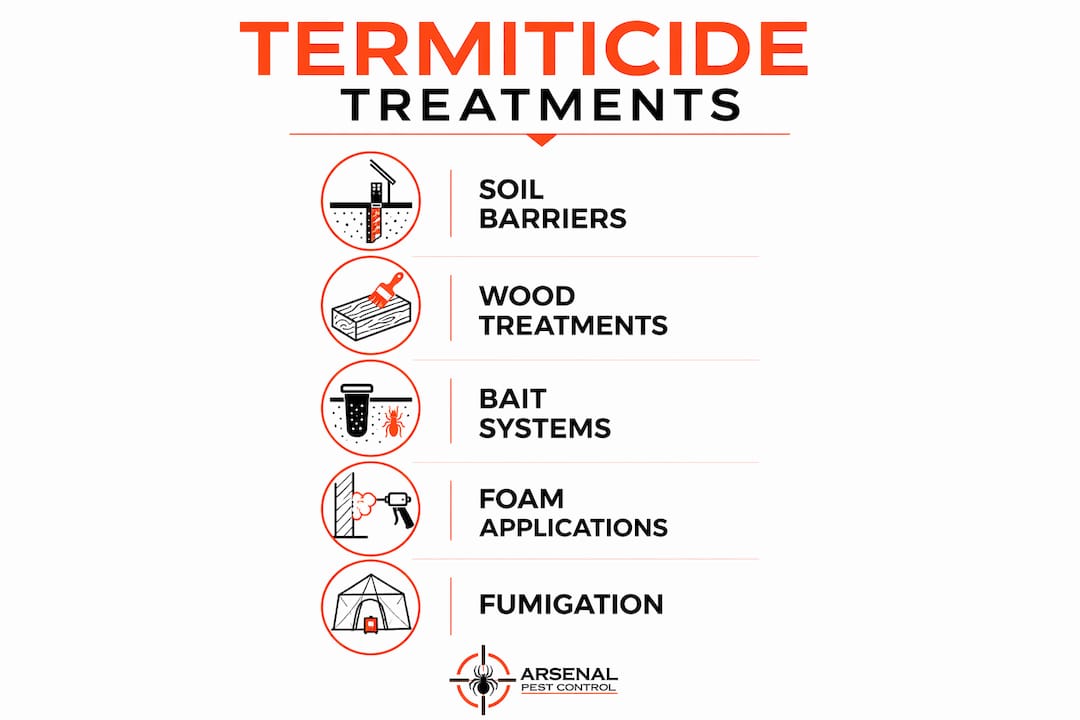
The goals of termiticide treatment come down to three things: blocking termites from entering a structure, eliminating an active colony, and preventing future infestations. Most products accomplish this through soil barriers, direct wood treatments, or bait systems without specifying exact durations. Each approach targets a different stage of the termite problem, which is why the right choice depends on your property’s construction, soil conditions, and whether termites are already present.
- Soil-applied liquid termiticides create a chemical zone around and beneath foundations
- Wood treatments deliver active ingredients directly into infested or at-risk timber
- Bait systems use slow-acting toxicants that foraging termites carry back to the colony
- Foam formulations reach wall voids and other confined spaces liquid cannot penetrate
- Fumigation clears severe drywood termite infestations throughout an entire structure
Professional application is not optional for most of these methods. The EPA is direct on this point: in most cases, termiticide application can only be properly performed by a trained pest management professional.
How termiticides actually control termites
The mechanism behind termite control is more interesting than most homeowners expect. Termiticides do not simply poison individual insects on contact. The real power comes from how termites behave socially.
Subterranean termites live in colonies of thousands and constantly groom and feed one another. Non-repellent termiticides exploit this behavior. When a termite crosses a treated zone, it picks up the active ingredient without detecting it, then carries it back to the nest and transfers it to nestmates through grooming and food sharing. Colony disruption through this transfer mechanism is what makes professional non-repellent barrier treatments more effective than any household product that kills only the termites you can see.
- Contact and ingestion are the two primary kill pathways for most termiticides
- Non-repellent formulas (such as fipronil-based products like Termidor) allow termites to pass through treated soil unknowingly, maximizing colony exposure
- Repellent formulas drive termites away from treated zones but do not eliminate the colony
- Soil barriers work by creating a chemical zone that termites crossing into the structure must pass through
- Bait systems rely on slow-acting toxicants so termites survive long enough to share the lethal dose with the colony
Termidor SC, one of the most widely used professional termiticides, is labeled for subterranean, drywood, dampwood, and arboreal termites. Its label specifies application only by licensed technicians, and the finished dilution must be applied in continuous treated zones to prevent termites from finding gaps.
Types of termiticide treatments
Soil-applied liquid barriers
This is the most common termite treatment method in North America. A technician applies hundreds of gallons of liquid termiticide into trenches dug around the foundation, through holes drilled into slabs, and along the interior perimeter of crawl spaces. The goal is a continuous chemical zone with no gaps. Even a small untreated gap can give a colony a path through.
Wood treatments
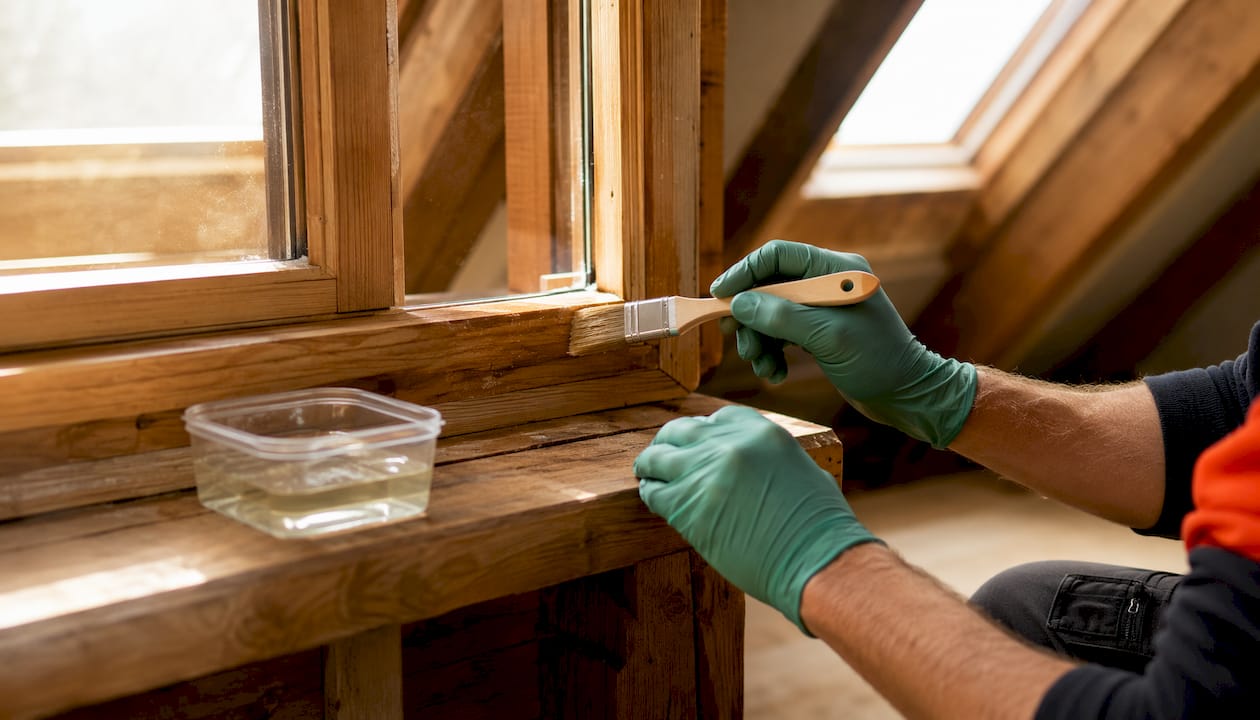
Surface sprays, brush-on borates, and injected formulas deliver termiticide directly into wood. Borates are particularly useful in new construction because they can be applied to framing lumber before walls close. Injections work for existing infestations by reaching termite galleries inside beams and joists.
Termite bait systems
Bait stations are installed in the ground around a property’s perimeter. Foraging termites find the cellulose-based bait, eat it, and share it with the colony. The toxicant acts slowly enough that the termite returns to the nest before dying, which is the whole point. Bait systems require ongoing monitoring and periodic replenishment, making them a long-term commitment rather than a one-time fix.
Foam applications
Foam termiticide expands to fill wall voids, pipe chases, and other spaces where liquid cannot flow evenly. Technicians use it as a complement to liquid barriers, particularly around plumbing penetrations and hollow-block foundations. Termidor SC, for example, is explicitly labeled for foam application in these situations.
Fumigation
Fumigation is reserved for severe drywood termite infestations. The entire structure is tented and filled with a gas fumigant, which penetrates every piece of wood and kills termites throughout the building. It works fast and thoroughly, but it leaves no residual protection once the gas dissipates.
Pro Tip: If you are dealing with subterranean termites, liquid barriers or bait systems are the standard approach. Fumigation is specifically suited to drywood species and is rarely necessary for subterranean infestations.
Is termiticide safe for your family and pets?
Safety is the question homeowners ask most often, and the honest answer is: yes, when applied correctly by a licensed professional. Termiticide chemicals are toxic during the wet application phase but become stable and safe once fully dried. The risk window is during and immediately after application, which is why occupants and pets must vacate treated areas until the product has cured.
The EPA’s regulatory process for termiticides is extensive. Before registration, applicants must submit more than 100 scientific studies covering human health and environmental effects. Most states add their own review layer on top of that. The result is that every registered termiticide has a documented safety profile, and the label directions are legally binding, not suggestions.
- Vacate the treated area during application and until re-entry conditions on the label are met
- Seal visible cracks before treatment to prevent chemical migration into living spaces
- Keep irrigation away from treated soil zones, since water can degrade the barrier
- Clean up any spills or leaks immediately, per EPA application safety requirements
The biggest safety risk with termiticides is DIY application. Effective termite control requires specialized equipment including masonry drills, high-pressure pumps, and large-capacity spray tanks. Without that equipment, a homeowner cannot achieve the continuous treated zone the label requires, which means both inadequate pest control and potential chemical misuse. Professionals apply termiticide in designated zones away from human contact, which is exactly what the label is designed to enforce.
For families with young children or pets, Arsenal Pest Control’s approach to safe pest treatments follows these same protocols, with clear re-entry guidance for every job.
How long does termiticide protection last?
The EPA’s own policy standard requires soil-applied termiticides to demonstrate at least five years of efficacy before registration. In practice, liquid soil-applied products provide multiple years of protection when properly maintained, depending on soil conditions and maintenance.
- Soil-applied liquid barriers typically last 3–5 years or more, depending on soil conditions and maintenance
- Wood treatments using borates can last 5–10 years in protected, dry applications
- Bait systems require annual monitoring and periodic bait replacement, with stations lasting up to 5 years with proper upkeep
- Fumigation provides no residual protection; follow-up measures are required after the gas dissipates
- Soil disturbance from landscaping, irrigation changes, or construction can break the chemical barrier and shorten protection significantly
If termites reappear the year after treatment, the cause is almost never product degradation. It is almost always a gap in the original barrier, whether from incomplete application or subsequent soil disturbance. Annual inspections catch these gaps before termites do. For property managers overseeing multiple units, the multi-unit termite treatment guide from Arsenal Pest Control covers scheduling and maintenance protocols in detail.
Environmental impact of termiticides
Modern registered termiticides are a significant improvement over the organochlorine compounds used before the 1980s. Products like chlordane persisted in soil for decades and posed real long-term risks. Current EPA-registered termiticides are designed to bind tightly to soil particles, which limits their movement into groundwater and reduces off-target exposure.
That said, no pesticide is entirely without environmental footprint. Soil-applied termiticides can affect non-target soil organisms, and runoff from improperly applied treatments can reach nearby water sources. Proper application technique, including avoiding over-application and keeping treated zones away from drainage paths, is the primary safeguard. Borate wood treatments carry a lower environmental risk profile than soil-applied liquid barriers, which is one reason they are popular in new construction and green building projects. Homeowners interested in pest prevention approaches that minimize chemical load can ask their pest control provider about borate-based options and bait systems as lower-impact alternatives to full liquid barrier treatments.
Crawl space conditions also affect how termiticides perform and how much chemical is needed over time. Moisture control through crawl space waterproofing reduces the wood-to-soil contact that attracts subterranean termites in the first place, which means less reliance on chemical barriers long-term.
Get professional termite protection from Arsenal Pest Control

Arsenal Pest Control serves Queen Creek, San Tan Valley, Gilbert, Chandler, Mesa, Apache Junction, Florence, and surrounding Arizona communities. The team handles termite inspections and treatments for both residential and commercial properties, with no long-term contracts and environmentally responsible methods. Whether you need a first inspection or a renewal of an existing barrier, Arsenal Pest Control brings the licensed expertise and professional equipment that effective termiticide application requires. View all services or schedule a free termite inspection today.
Key Takeaways
Termiticides registered by the US EPA must demonstrate at least five years of structural protection, and professional application is the only reliable way to achieve a continuous, effective chemical barrier.
| Point | Details |
|---|---|
| EPA registration standard | All soil-applied termiticides must prove at least 5 years of efficacy before the EPA approves them for sale. |
| Colony transfer is the key | Non-repellent termiticides work by letting termites carry the active ingredient back to the colony, eliminating it from within. |
| Treatment lifespan varies | Liquid barriers last 3–5 years or more; bait stations need annual monitoring and can last up to 5 years with maintenance. |
| Safety after drying | Termiticides are toxic when wet but become stable and safe once fully cured, provided a licensed professional applies them correctly. |
| DIY is not viable | Effective application requires masonry drills, high-pressure pumps, and large-capacity tanks that homeowners do not have access to. |
Recommended
- Types of Termite Treatments for Commercial Properties – Arsenal Pest Control
- Multi-Unit Termite Treatment: A Property Manager’s Guide – Arsenal Pest Control
- Safe Pest Control for Kids and Pets: A Family Guide – Arsenal Pest Control
- Why DIY Pest Control Fails: What Homeowners Must Know – Arsenal Pest Control
