

Proactive pest management is one of the most financially and legally consequential decisions an HOA board makes. Arizona’s climate gives termites, scorpions, rodents, and ants year-round opportunity to damage structures, threaten residents, and erode property values before anyone notices. Here is why community-wide pest control belongs in every HOA’s operating budget:
- Protects resale values and curb appeal across the entire community
- Prevents structural damage from subterranean termites that can cost tens of thousands in repairs, forcing HOAs to levy special assessments.
- Reduces long-term costs compared to fragmented, unit-by-unit treatments
- Meets the board’s fiduciary and legal duty to maintain safe common areas
- Applies Integrated Pest Management (IPM) principles for durable, low-chemical results
- Stops infestations from spreading through shared walls, landscaping, and utilities
1. Why pest management directly affects HOA property values
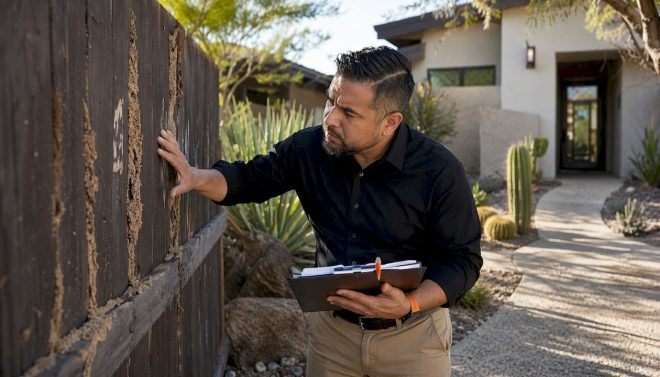
Pest damage does not stay hidden forever, and when it surfaces, buyers notice immediately. Termite mud tubes on fencing, rodent droppings near walkways, and wasp nests over pool decks all signal neglect to prospective buyers. A community known for pest problems faces longer listing times and lower offer prices across every unit, not just the affected ones.
Subterranean termites travel underground and can infest multiple properties simultaneously, often going undetected for months. By the time visible damage appears, the repair bill is already steep, and HOAs without a prevention plan typically fund emergency fixes through special assessments.
2. Community-wide treatment costs less than individual fixes
Pests spread through shared spaces like walls, attics, and utility lines, so treating one unit while leaving neighbors untreated simply relocates the colony. An early-stage ant or rodent problem treated at the colony level costs significantly less than waiting until the infestation spreads through multiple units, which increases treatment costs substantially.

Coordinated HOA contracts also give boards negotiating leverage that individual homeowners lack, and scheduled service prevents the emergency call premiums that reactive programs always generate.
3. IPM is the right framework for Arizona HOAs
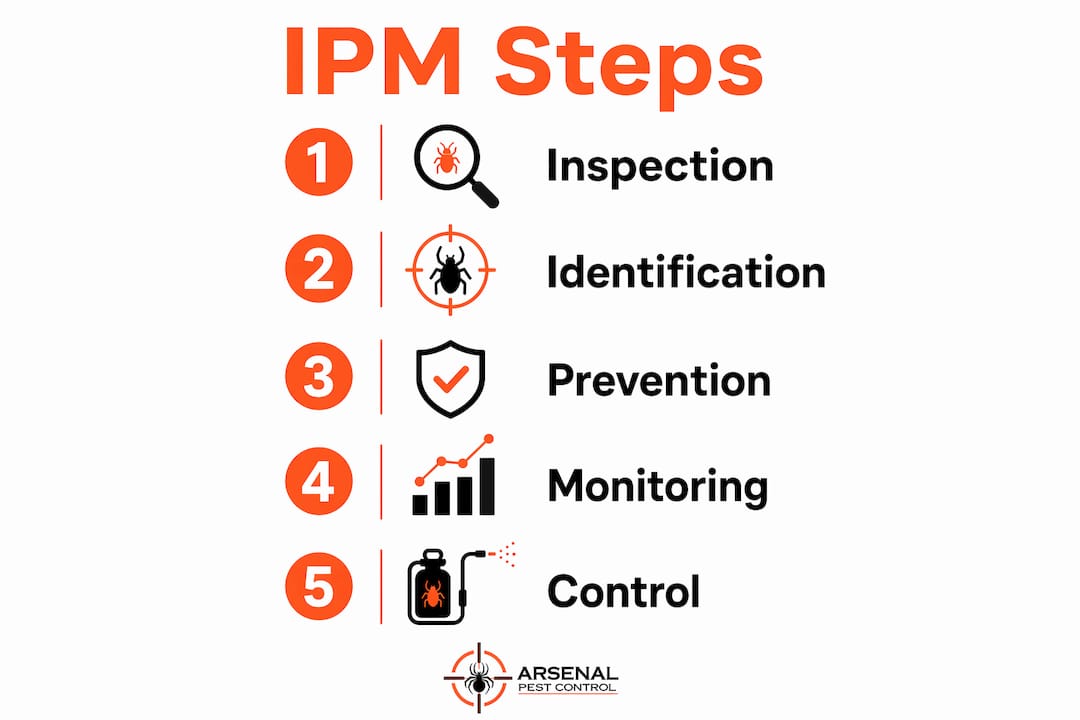
Integrated Pest Management (IPM) prioritizes prevention and monitoring before any chemical application. The hierarchy works: fix conditions that attract pests, monitor regularly, then intervene with the least disruptive method that actually works. Boards that follow IPM principles through a seasonal pest control program spend less over time and avoid the recurring infestations that spray-only contracts produce.
Pro Tip: Schedule late-winter inspections before spring activity peaks. In Arizona, gophers actively damage irrigation systems and root systems during cooler months, and catching them early prevents expensive landscape repairs.
4. Legal and fiduciary responsibilities boards cannot ignore
HOA boards have a legal duty to maintain safe common areas, and pest management falls squarely within that obligation. If an infestation originating in a common area spreads to individual units and the board failed to act, the association faces real liability exposure. Detailed pest control records, treatment logs, and vendor contracts all serve as documented evidence of due care if a dispute arises.
5. Arizona-specific pests that demand coordinated HOA response
| Pest | Primary threat | Timing |
|---|---|---|
| Subterranean termites | Structural wood damage, special assessments | Year-round; peak spring |
| Scorpions | Resident safety, liability | Spring through fall |
| Gophers and rodents | Irrigation lines, landscaping, wiring | Late winter through spring |
| Ants | Spread through shared framing, food areas | Spring and summer |
HOA pest control in Arizona requires a provider who knows these species and their seasonal patterns, not a general landscaper applying a generic perimeter spray.
Arsenal Pest Control: built for Arizona HOA communities
Arizona HOA boards need a pest partner who knows the terrain, not a national franchise reading from a script.

Arsenal Pest Control is a family-owned company serving Queen Creek, Mesa, Gilbert, Chandler, San Tan Valley, Florence, and Apache Junction. The team handles termite control, scorpion control, rodent and gopher removal, ant control, bee removal, and mosquito control under one contract, with no long-term commitments required. Treatments follow environmentally responsible IPM principles, keeping common areas safe for kids, pets, and residents. Free termite inspections are available for HOA communities, and the full range of pest control services is built around the specific pressures Arizona communities face in 2026.
Key Takeaways
Arizona HOAs that invest in proactive, community-wide pest management protect property values, reduce repair costs, and meet their legal obligations before damage forces their hand.
| Point | Details |
|---|---|
| Property value protection | Unmanaged pests visibly signal neglect, lowering resale values across every unit in the community. |
| Cost of inaction | Early colony treatment typically costs hundreds of dollars, while advanced infestations affecting multiple units can cost thousands, with final repair and control costs affected by scope, severity, and frequency. |
| IPM as the standard | Integrated Pest Management reduces chemical overuse and prevents recurring infestations through prevention and monitoring. |
| Legal duty | Boards that fail to manage pests in common areas face liability if infestations spread to individual units. |
| Arsenal Pest Control | Serves Arizona HOAs with no long-term contracts, free termite inspections, and IPM-based treatments across the East Valley. |
Recommended
- Homeowners Association Pest Control in Queen Creek, Arizona
- What Is Quarterly Pest Service? A Homeowner’s Guide – Arsenal Pest Control
- How to Read a Pest Control Treatment Report in Arizona – Arsenal Pest Control
- Commercial vs Residential Pest Control: Arizona Guide – Arsenal Pest Control
