


Pest-proofing a commercial kitchen is the coordinated process of implementing structural, sanitation, monitoring, and management measures to prevent pest entry and infestations that threaten food safety and regulatory compliance. The industry standard term for this practice is Integrated Pest Management, or IPM, and it covers far more than monthly spraying. The FDA Food Code and the Food Safety Modernization Act (FSMA) both require documented pest management as a mandatory prerequisite program, with records kept for a minimum of two years. For restaurant and commercial kitchen managers, pest-proofing is not optional. It is a core operational responsibility that directly determines your inspection scores, audit outcomes, and the safety of every plate leaving your kitchen.
What is pest-proofing in a commercial kitchen?
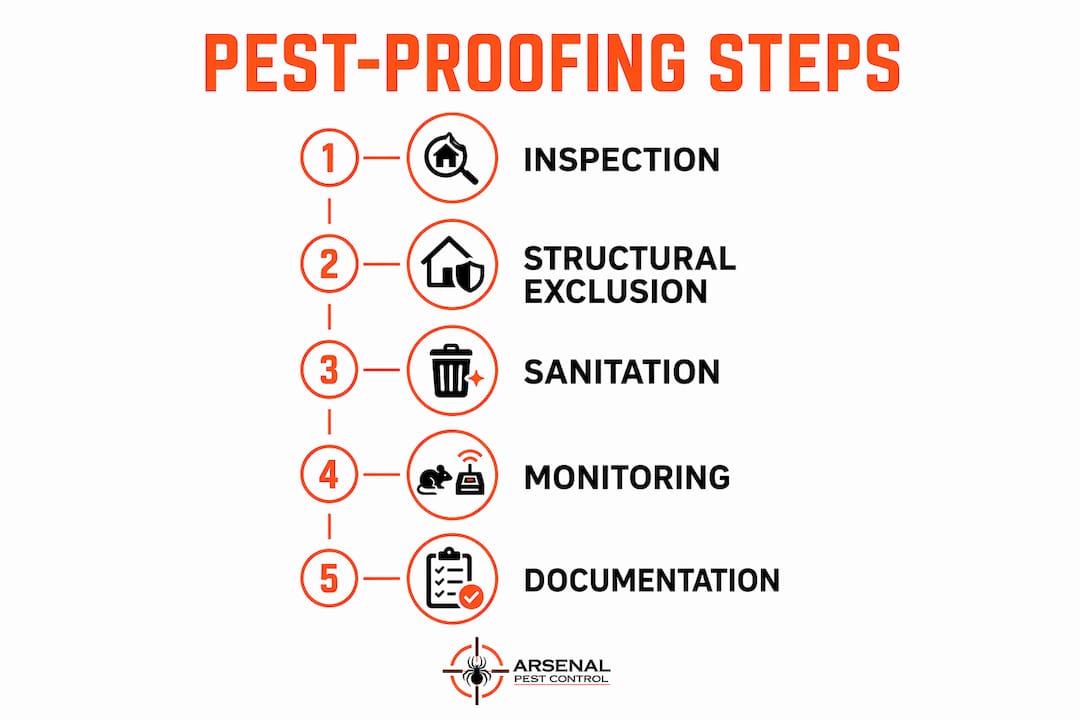
Pest-proofing a commercial kitchen means building a layered defense that stops pests from entering, surviving, and reproducing inside your facility. The IPM industry standard replaces the outdated model of reactive monthly spraying with five coordinated components: routine inspections, rigorous sanitation, structural exclusion, proactive monitoring, and targeted minimal-risk treatments. Each layer reinforces the others. Sanitation removes the food and moisture that attract pests. Exclusion physically blocks their entry. Monitoring catches activity early, before populations grow. Targeted treatments address confirmed problems without blanket chemical use.
The pests most commonly found in commercial kitchens include cockroaches, rodents, flies, ants, and stored product pests. Cockroaches behind cooking lines are a reliable signal of moisture and sanitation failures, not just pest presence. That distinction matters because treating the symptom without fixing the underlying condition guarantees the infestation returns.
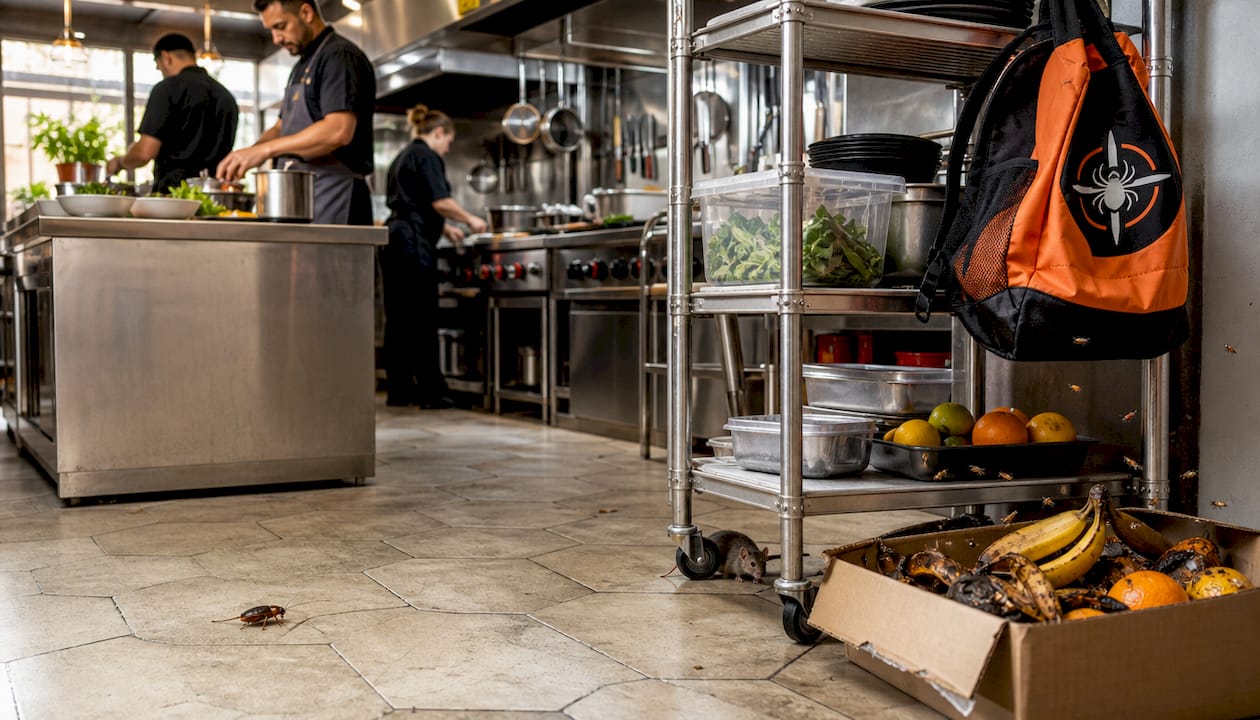
Traditional reactive pest control waits for a problem to appear and then responds. IPM prevents the problem from developing in the first place. The cost difference between these two approaches is significant. Reactive remediation after a confirmed infestation costs far more in labor, chemicals, downtime, and reputational damage than a consistent prevention program.
Pro Tip: Schedule your internal pest inspections on the same calendar cycle as your food safety audits. Aligning these reviews catches structural and sanitation issues before an external inspector does.
What are the key components of an effective pest-proofing program?
An effective pest-proofing program for a commercial kitchen runs on five pillars, and skipping any one of them creates a gap that pests will find.
- Routine inspections. Walk every zone of your kitchen on a fixed schedule. High-risk zones such as receiving docks, dry storage, and floor drains need at least bi-weekly review. Monthly inspections are the minimum for lower-risk areas, but high-activity zones demand more frequent attention.
- Sanitation. Remove food debris daily. Clean floor drains on a set schedule. Keep floors dry. Organize dry storage on shelving at least six inches off the floor. Moisture control is as critical as food debris removal because pests need water to survive.
- Structural exclusion. Seal every gap, crack, and opening that connects the interior to the outside. This is the physical barrier layer of your program and the one most often neglected after opening day.
- Monitoring. Place glue boards, rodent stations, and insect light traps in documented locations. Review and log them on a fixed schedule. Monitoring data tells you where pressure is building before you have a full infestation.
- Targeted treatments. When monitoring confirms pest activity, chemical use is restricted to structural voids, exterior areas, and minimal-risk applications. Residual insecticides are off-limits in production areas with unpackaged food.
The contrast with traditional pest control is direct. Monthly perimeter spraying with no inspection or monitoring component misses the root causes entirely. IPM addresses behavior, environment, and structure together.
How do regulations and industry standards shape pest-proofing requirements?
Regulatory compliance is not a background concern for commercial kitchen managers. It is the framework your pest-proofing program must be built around.
- FSMA prerequisite program requirements. FSMA classifies pest management as a mandatory prerequisite program. Your facility must maintain a written pest management plan, service reports, pest activity logs, and corrective action records. Records must be kept for a minimum of two years and must be available on demand during FDA inspections.
- FDA Food Code compliance. The FDA Food Code requires evidence of active pest prevention, not just the absence of pests. Inspectors look for documented monitoring data, corrective actions taken in response to pest activity, and a current pest management plan.
- Third-party audit standards. SQF, BRC, and AIB audits treat structural exclusion as an auditable IPM element. Preemptive sealing scores better than retrospective fixes discovered during an audit. Auditors review your documentation first, then inspect the facility.
- HACCP integration. In some facilities, pest monitoring is designated as a Critical Control Point (CCP) within the HACCP plan. When that is the case, deviations from monitoring schedules require documented corrective actions just like any other CCP deviation.
Auditors prioritize evidence of proactive pest control systems, including monitoring, documentation, and corrective actions, over the mere absence of pests. A facility with thorough records and one resolved pest incident scores better than a facility with no records and no visible pests.
Documentation of corrective actions is consistently the first thing scrutinized during audits. Managers who treat record-keeping as an afterthought consistently underperform on inspections, even when their physical facility is in good condition.
Which structural vulnerabilities most commonly let pests in?
Structural exclusion is the most underinvested component of commercial kitchen pest-proofing. Most managers focus on sanitation and treatments while ignoring the physical gaps that allow pests to enter in the first place.
| Entry Point | Common Pest | Recommended Fix |
|---|---|---|
| Roofline vents and gaps | Rodents, birds, cockroaches | Galvanized mesh screens, sealed flashing |
| Door sweeps and gaps | Rodents, cockroaches, flies | Heavy-duty door sweeps, door seals |
| Foundation cracks | Rodents, ants, cockroaches | Concrete patching, copper mesh fill |
| Floor drain surrounds | Cockroaches, flies | Drain covers, silicone sealing |
| Sub-slab conduit penetrations | Rodents, cockroaches | Fire-rated expanding foam, steel wool packing |
| Dock seals and loading doors | Rodents, flies | Dock seals, air curtains |
Professional audits consistently identify rooflines, door openings, and below-grade exposures as the standard points of failure in commercial kitchen exclusion programs. These are not obscure vulnerabilities. They are predictable, and they are fixable before pests find them.
The timing of exclusion work matters more than most managers realize. Pest-proofing started during kitchen design and fit-out costs a fraction of what remediation costs after operations begin. Sealing conduit penetrations and installing door sweeps before opening day is a one-time investment. Fixing an active rodent infestation in a running kitchen involves downtime, emergency service fees, and potential health department action.
Inspect your facility’s exterior perimeter at least quarterly. Walk the roofline, check every door and loading dock, and probe foundation areas near utility penetrations. Use a flashlight and a thin probe to find gaps that are not visible in normal lighting.
Pro Tip: Use the facility exclusion checklist from Arsenal Pest Control as a starting template for your quarterly structural inspection. Adapt it to your specific building layout and document every finding.
What ongoing practices keep a commercial kitchen pest-free?
Pest-proofing is not a one-time project. It is a set of daily and weekly habits embedded into your kitchen’s operational culture.
- Train your staff to detect and report. Every team member who works in the kitchen should know what pest activity looks like: droppings, gnaw marks, grease trails, shed skins, and live or dead insects. Create a simple reporting process and make it clear that early reports are valued, not penalized.
- Follow a documented sanitation schedule. Daily tasks include wiping down cooking surfaces, sweeping and mopping floors, emptying grease traps, and removing trash. Weekly tasks include deep cleaning behind equipment, scrubbing floor drains, and inspecting dry storage for spills or damaged packaging.
- Control moisture actively. Fix dripping pipes and condensation issues immediately. Moisture control is as important as food debris removal. A dry kitchen with minor sanitation lapses is far less attractive to pests than a wet kitchen with spotless surfaces.
- Maintain your monitoring stations. Check glue boards and rodent stations on a fixed schedule. Log the date, location, and findings every time. Replace spent monitors promptly. Gaps in your monitoring log are gaps in your compliance record.
- Keep your pest activity logs current. Pest activity logs and service reports must be retained for a minimum of two years. Many managers underestimate this requirement until an audit reveals missing records.
- Partner with a qualified pest control provider. A professional service brings inspection expertise, licensed treatment options, and audit-ready documentation that most in-house programs cannot replicate. Pest management integrated directly into daily operations outperforms external bolt-on services every time.
Persistent pest issues signal deeper operational or structural failures. When the same pest keeps returning, the answer is not more treatment. The answer is a thorough review of sanitation practices, structural integrity, and monitoring coverage to find what is being missed.
What Arsenal Pest Control has learned from commercial kitchen accounts
The most common mistake we see in commercial kitchens is treating pest control as a vendor relationship rather than an operational system. A manager calls a pest control company when they see a cockroach. The company treats the visible problem. The cockroach returns because the floor drain was never cleaned and the conduit behind the fryer was never sealed. This cycle repeats until a health inspector closes the kitchen or a third-party audit fails.
Pest-proofing works when it is embedded in the kitchen’s daily rhythm, not scheduled around it. The kitchens that consistently pass audits and maintain clean inspection records are the ones where staff report pest sightings without hesitation, where sanitation schedules are followed even during busy service, and where structural repairs are treated with the same urgency as equipment failures.
The documentation requirement is the piece that surprises most managers. Two years of pest activity logs, service reports, and corrective action records is a significant paper trail. Managers who start building that record from day one are never caught short during an audit. Managers who start after their first failed inspection spend months trying to reconstruct records that should have been routine.
Pest-proofing is not a specialty service. It is a core part of running a safe, compliant commercial kitchen. Treat it that way, and the inspections take care of themselves.
— Arsenal Pest Control
Arsenal Pest Control’s commercial kitchen pest management services
Commercial kitchen managers in Queen Creek, Gilbert, Chandler, Mesa, and surrounding Arizona communities can work directly with Arsenal Pest Control for tailored pest management programs built around IPM principles and audit-compliant documentation.

Arsenal Pest Control designs commercial pest control programs that include scheduled inspections, structural exclusion assessments, monitoring station placement, and the service documentation your facility needs for FDA, SQF, and BRC audits. Every program is built around your kitchen’s specific layout, risk profile, and inspection schedule. There are no long-term contracts, and every treatment uses environmentally responsible methods. Contact Arsenal Pest Control to schedule a commercial kitchen assessment and get your pest-proofing program on a documented, compliant footing.
Key takeaways
Effective pest-proofing in a commercial kitchen requires IPM, structural exclusion, documented sanitation, and two years of pest activity records to satisfy FDA and third-party audit requirements.
| Point | Details |
|---|---|
| IPM is the standard | Integrated Pest Management replaces reactive spraying with inspections, sanitation, exclusion, monitoring, and targeted treatments. |
| Documentation is non-negotiable | FDA and FSMA require pest activity logs, service reports, and corrective actions retained for a minimum of two years. |
| Structural exclusion is often neglected | Rooflines, door sweeps, foundation cracks, and sub-slab conduits are the most common pest entry points in commercial kitchens. |
| Moisture control matters as much as sanitation | Fixing leaks and condensation removes a key pest attractant that food debris removal alone cannot address. |
| Auditors check records first | Evidence of proactive monitoring and corrective actions outweighs the absence of visible pests during an audit. |
FAQ
What is pest-proofing in a commercial kitchen?
Pest-proofing is the coordinated use of Integrated Pest Management practices, including structural exclusion, sanitation, monitoring, and targeted treatments, to prevent pests from entering or surviving in a commercial kitchen. It is a regulatory requirement under the FDA Food Code and FSMA, not an optional service.
Which pests most commonly infest commercial kitchens?
Cockroaches, rodents, flies, ants, and stored product pests are the most frequent threats in commercial kitchens, drawn by food, moisture, humidity, and harborage points. Cockroaches found behind cooking lines typically indicate moisture and sanitation failures rather than simple pest pressure.
How often should a commercial kitchen be inspected for pests?
High-risk zones such as receiving docks, floor drains, and dry storage require bi-weekly or weekly inspection. Lower-risk areas need at least monthly review. Inspection frequency should increase during warmer months or after any structural changes to the facility.
What records does a commercial kitchen need for pest control compliance?
FSMA requires a written pest management plan, pest activity logs, service reports, and corrective action documentation. All records must be retained for a minimum of two years and must be available on demand during FDA inspections and third-party audits.
Can commercial kitchens use standard pesticides for pest control?
Chemical treatments in commercial kitchens are restricted to structural voids, exterior areas, and minimal-risk applications. Residual insecticides are not permitted in production areas where food is unpackaged. All treatments must be documented precisely as part of the facility’s pest management records.
Recommended
- Seasonal Pest Control for Commercial Property: 2026 Guide – Arsenal Pest Control
- Commercial Property Pest Exclusion: A Facility Manager’s Guide – Arsenal Pest Control
- Why DIY Pest Control Fails: What Homeowners Must Know – Arsenal Pest Control
- About Arsenal Exterminating, Eco-friendly Pest Control
