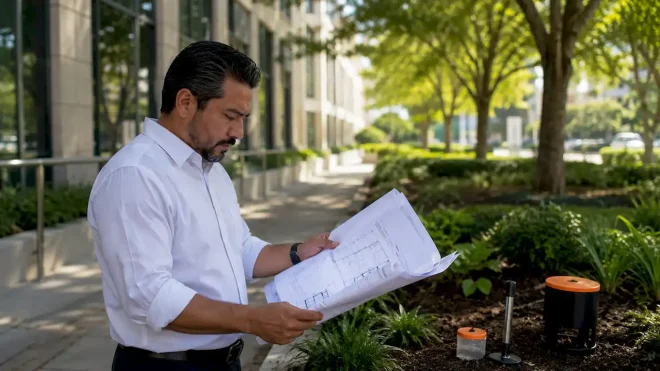
Commercial termite control is defined by four proven treatment categories: liquid soil barriers, baiting systems, whole-structure fumigation, and localized wood treatments. Each method targets different termite species, infestation stages, and building conditions. Choosing the wrong type wastes money and leaves your property exposed. The National Pest Management Association (NPMA) and EPA licensing requirements both shape which treatments licensed professionals can legally apply in commercial settings. This guide breaks down every major treatment type so you can match the right method to your building’s specific conditions.
1. Types of termite treatments commercial properties rely on most
Four primary commercial termite treatments define the industry: liquid soil barriers, bait systems, whole-structure fumigation, and localized wood treatments. Each serves a distinct role depending on termite species, infestation severity, and site conditions. No single method works universally across all commercial buildings. Understanding how each one functions is the first step toward building a treatment plan that actually holds.
2. Liquid soil barrier treatments
Liquid soil barriers are the most widely used method for subterranean termite treatment in commercial buildings. The process involves trenching around the building’s perimeter, rodding the soil, and injecting termiticide directly beneath slabs through a technique called sub-slab injection. The goal is to create a continuous chemical zone that termites cannot cross without contacting the product.
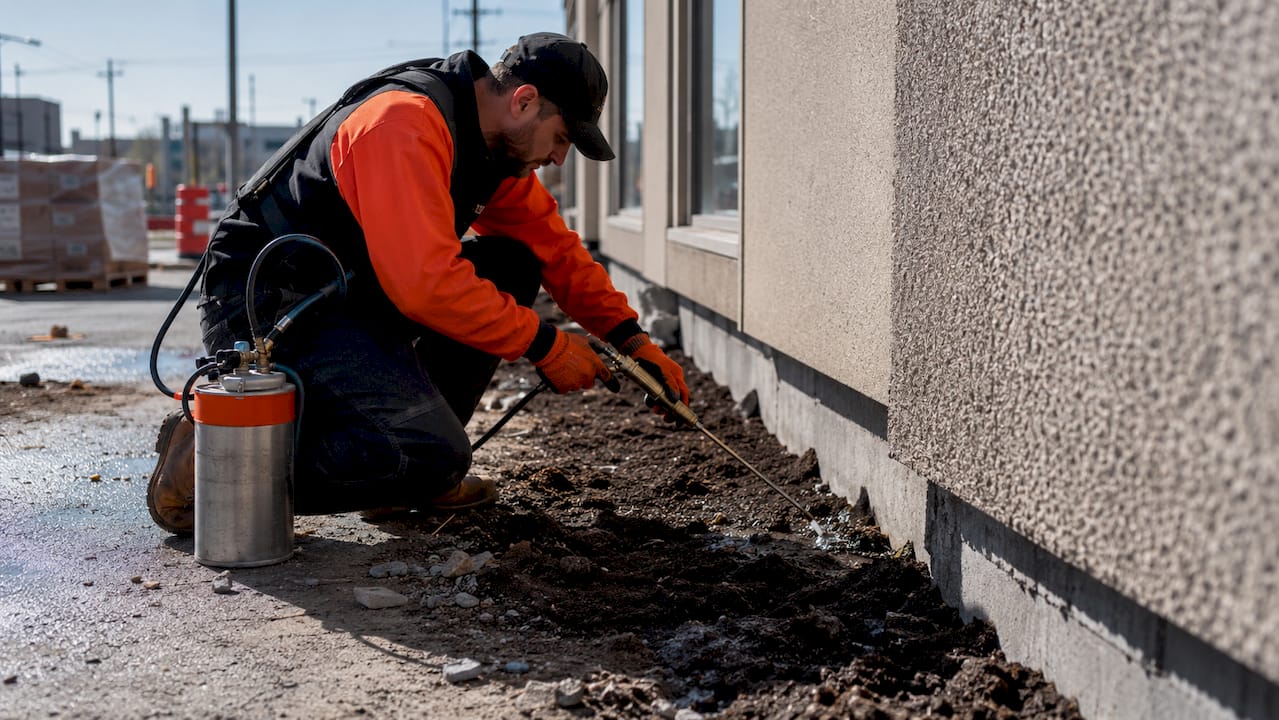
The most effective liquid termiticides are non-repellent formulations. Non-repellent termiticides like fipronil and imidacloprid work through trophallaxis, meaning termites unknowingly carry the toxicant back to the colony and spread it through grooming and feeding. This colony transfer effect makes non-repellent products far more effective than older repellent formulas that termites simply avoided.
Key advantages and limitations of liquid barriers:
- Advantages: Immediate protection after application, multi-year residual activity, proven track record with subterranean species
- Limitations: Invasive application that may disrupt operations, environmental risk near water sources, periodic retreatment required as soil shifts or product degrades
Site factors like water tables and soil conditions often dictate whether liquid treatment is even feasible. Sandy or highly permeable soils may allow termiticide to migrate away from the target zone, while high water tables can dilute or displace the chemical barrier entirely.
Pro Tip: Ask your pest control provider to conduct a soil assessment before committing to a liquid barrier. Clay-heavy soils in Arizona’s East Valley hold termiticide well, but loose sandy soils near drainage areas may require higher application volumes or alternative methods.
3. Termite baiting systems for long-term colony suppression
Baiting systems take a fundamentally different approach to termite control for commercial properties. Instead of creating a chemical barrier, bait stations are placed in the soil around the building’s perimeter at regular intervals. Termite foragers find the bait, consume it, and carry it back to the colony.
Bait stations use insect growth regulators like hexaflumuron, a chitin synthesis inhibitor that disrupts molting. Termites cannot shed their exoskeletons properly, which kills them during the growth cycle. Colony suppression typically takes 3–6 months, making baiting a slower but highly targeted method.
Advantages and limitations of bait systems:
- Advantages: Minimal disruption to building operations, suitable for environmentally sensitive sites, provides ongoing colony monitoring
- Limitations: Slower results compared to liquid barriers, higher ongoing service costs, requires regular technician visits to inspect and refresh stations
Bait systems generally carry higher upfront and monitoring costs than liquid treatments, but they provide continuous surveillance of termite activity around the building. That ongoing data is valuable for commercial property managers who need documented proof of active pest management for insurance or compliance purposes.
Pro Tip: Combining bait stations with a liquid barrier gives you the best of both methods. The liquid barrier provides immediate protection while the bait system works to eliminate the colony at its source. Industry data shows that 68% of professional termite services now offer combined bait and liquid treatments for exactly this reason.
4. Whole-structure fumigation for drywood termite infestations
Fumigation is the standard treatment when drywood termites have infested internal wood structures that liquid or bait methods cannot reach. The process requires tenting the entire building, sealing it completely, and releasing sulfuryl fluoride gas throughout the structure.
Fumigation with sulfuryl fluoride kills all termite life stages within 24–72 hours. The building must remain unoccupied for the full treatment window, and only licensed applicators with restricted-use product certification can legally perform the work. For commercial buildings, this means coordinating tenant displacement, securing the property, and planning for a multi-day operational shutdown.
Fumigation is not a preventive measure. It addresses active drywood termite infestations where colonies have established inside wall voids, roof timbers, or structural framing. Once the gas dissipates, there is no residual protection, so follow-up monitoring or a liquid barrier is necessary to prevent reinfestation.
Key considerations for commercial fumigation:
- Best suited for drywood termite species, not subterranean termites
- Requires full building evacuation and coordination with tenants
- No residual protection after treatment, so follow-up prevention is required
- Restricted to licensed applicators only under EPA regulations
5. Localized wood treatments for isolated infestations
Localized treatments target specific areas of wood damage rather than the entire structure. The two most common methods are borate treatments and orange oil injections. Both are applied directly to infested or at-risk wood and work by penetrating the wood grain to kill termites on contact.
Borate treatments, such as products containing disodium octaborate tetrahydrate, are particularly effective for exposed framing, subfloor joists, and attic timbers. Borates are low in toxicity to humans and pets, which makes them a practical choice for occupied commercial buildings where minimizing chemical exposure matters. Orange oil, derived from orange peel extract, works similarly but has a shorter residual period.
Localized treatments work best when the infestation is contained and the affected wood is accessible. They are not a substitute for full-structure fumigation when drywood termites have spread through multiple areas. For commercial property managers dealing with a small, identified pocket of damage, localized treatment avoids the cost and disruption of a full fumigation.
6. Comparing treatment types: a decision framework for property managers
Choosing the right termite treatment for a commercial building requires weighing speed, residual protection, cost, and operational impact side by side.
| Treatment type | Target species | Speed of results | Residual protection | Operational disruption |
|---|---|---|---|---|
| Liquid soil barrier | Subterranean | Immediate | Multi-year | Moderate |
| Bait system | Subterranean | 3–6 months | Ongoing with monitoring | Low |
| Whole-structure fumigation | Drywood | 24–72 hours | None | High |
| Localized wood treatment | Drywood | Days to weeks | Moderate | Low |
Treatment selection depends more on site-specific hazards and property layout than on product marketing. A building with a complex slab, underground utilities, or proximity to a water source may not be a candidate for standard liquid barrier application. Slab complexity and environmental restrictions often require customized liquid barrier applications in commercial buildings.
Integrated Pest Management (IPM) protocols including inspections, moisture control, and service documentation are the foundation of long-term commercial termite control. IPM is not a single treatment. It is a documented system that combines multiple methods, regular monitoring, and corrective action based on inspection findings.
Documentation of inspections and treatments supports regulatory compliance and insurance eligibility in commercial property pest management. The NPMA Form 33 (Wood-Destroying Insect Inspection Report) is the standard document used to record findings and treatment history. Keeping this record current protects your property’s value and satisfies lender and insurer requirements.
Pro Tip: Schedule a professional termite inspection before renewing any commercial lease or refinancing a property. Undisclosed termite damage discovered during due diligence can delay closings and trigger costly remediation requirements.
7. Moisture control and structural factors that affect treatment success
Chemical treatments alone do not prevent recurring termite problems. Moisture sources and wood decay must be addressed alongside chemical treatments to prevent termites from returning. Subterranean termites are drawn to moisture-damaged wood and soil with high water content. A liquid barrier applied to a building with active roof leaks or plumbing failures will not hold long-term.
Commercial property managers should audit moisture entry points before any termite treatment begins. This includes checking HVAC condensate lines, roof drainage, irrigation proximity to the foundation, and any areas where wood contacts soil directly. Fixing these conditions extends the life of any chemical treatment and reduces the likelihood of reinfestation.
Commercial property pest exclusion strategies work alongside termite treatments to reduce entry points and harborage conditions. Sealing gaps around utility penetrations, replacing damaged wood, and maintaining clearance between soil and structural wood are all low-cost steps that meaningfully reduce termite pressure over time.
Key takeaways
The most effective termite control for commercial properties combines liquid barriers for immediate subterranean protection with bait systems for long-term colony monitoring and suppression.
| Point | Details |
|---|---|
| Match treatment to termite species | Subterranean termites need soil barriers or bait; drywood termites require fumigation or localized wood treatment. |
| Combined methods outperform single treatments | 68% of professional services use both liquid and bait treatments for balanced protection. |
| Site conditions drive treatment choice | Water tables, soil type, and slab complexity determine which methods are feasible. |
| Documentation protects your asset | NPMA Form 33 records support insurance eligibility and regulatory compliance. |
| Moisture control is non-negotiable | Addressing leaks and drainage before treatment prevents reinfestation and extends chemical residuals. |
What we’ve learned from years of commercial termite work
The biggest mistake commercial property managers make is treating termite control as a one-time event. We see it regularly at Arsenal Pest Control. A building gets treated, the paperwork gets filed, and then nothing happens for three years until a tenant reports soft flooring or a wall inspection reveals active galleries.
Termite pressure in Arizona is year-round. Subterranean species like Heterotermes aureus and Reticulitermes are active in the soil even during cooler months, and drywood species can establish in attic spaces without any visible ground activity. Waiting for visible damage means the colony has already been feeding for months, sometimes years.
The properties that hold up best over time are the ones with documented IPM programs. That means scheduled inspections, written treatment records, and a technician who knows the building’s history. When we take over a commercial account that has been managed this way, the treatment decisions are straightforward. When we inherit a property with no records and no prior monitoring, we are starting from scratch, and that costs the owner more.
My honest recommendation: combine a liquid barrier with a perimeter bait system, schedule annual inspections, and fix every moisture problem you find. That combination covers both immediate protection and long-term colony surveillance. It is not the cheapest upfront option, but it is the least expensive approach over a 10-year horizon.
— Arsenal Pest Control
Professional termite treatment for your commercial property
Arsenal Pest Control provides licensed termite inspections, treatment planning, and ongoing monitoring for commercial properties across Queen Creek, Gilbert, Chandler, Mesa, and surrounding Arizona communities.
Whether your building needs a liquid barrier treatment for subterranean termites or a full fumigation plan for drywood species, Arsenal Pest Control’s licensed technicians assess your site conditions first and recommend only what your property actually needs. No long-term contracts, no upselling, and no guesswork on treatment selection. View Arsenal Pest Control’s full commercial pest control services or schedule a free termite inspection to get a site-specific treatment plan built around your building.
FAQ
What are the main types of termite treatments for commercial buildings?
The four main types are liquid soil barriers, bait systems, whole-structure fumigation, and localized wood treatments. Each targets different termite species and infestation conditions.
How long does commercial termite treatment take to work?
Liquid barriers provide immediate protection after application. Bait systems suppress colonies over 3–6 months. Fumigation eliminates all life stages within 24–72 hours but leaves no residual protection.
Can commercial buildings stay open during termite treatment?
Bait systems and localized wood treatments allow normal building operations to continue. Whole-structure fumigation requires full evacuation for 24–72 hours, making operational planning critical for commercial tenants.
What termite treatment works best for subterranean termites in Arizona?
Non-repellent liquid termiticides containing fipronil or imidacloprid are the most effective for subterranean termite treatment in Arizona. Combining a liquid barrier with a perimeter bait system provides both immediate and long-term colony control.
Why does documentation matter for commercial termite treatment?
NPMA Form 33 inspection records support insurance eligibility and regulatory compliance. Lenders and insurers often require documented treatment history before approving financing or coverage on commercial properties.
Recommended
- Multi-Unit Termite Treatment: A Property Manager’s Guide – Arsenal Pest Control
- Free Termite Inspection | Expert Termite Control & Treatment
- Seasonal Pest Control for Commercial Property: 2026 Guide – Arsenal Pest Control
- Termite Removal Queen Creek | Termite Exterminator & Control