


Multi-unit termite treatment is the coordinated process of treating all connected residential units in a building simultaneously to eliminate termite colonies and stop cross-unit spread. Unlike single-family home treatments, this approach accounts for shared walls, floors, and framing that give termites a direct path between units. The National Pest Management Association (NPMA) recognizes that subterranean and drywood termites both thrive in the dense structural environments of apartment complexes, condominiums, and townhomes. Property managers who understand what is multi-unit termite treatment gain a real advantage in protecting their buildings and controlling long-term costs.
What challenges do multi-unit properties face in termite control?
Termites do not respect property lines or unit boundaries. A colony that starts in one ground-floor unit can spread through shared floor joists, wall studs, and concrete slab penetrations into every adjacent unit within months. This biology makes multi-unit pest control fundamentally different from treating a standalone home.
The most common mistake property managers make is authorizing treatment for only the unit where termites were first spotted. Treating single units in isolation almost always leads to recurring infestations because termites simply relocate through the shared structure. That recurring cycle costs far more over time than a single coordinated treatment.
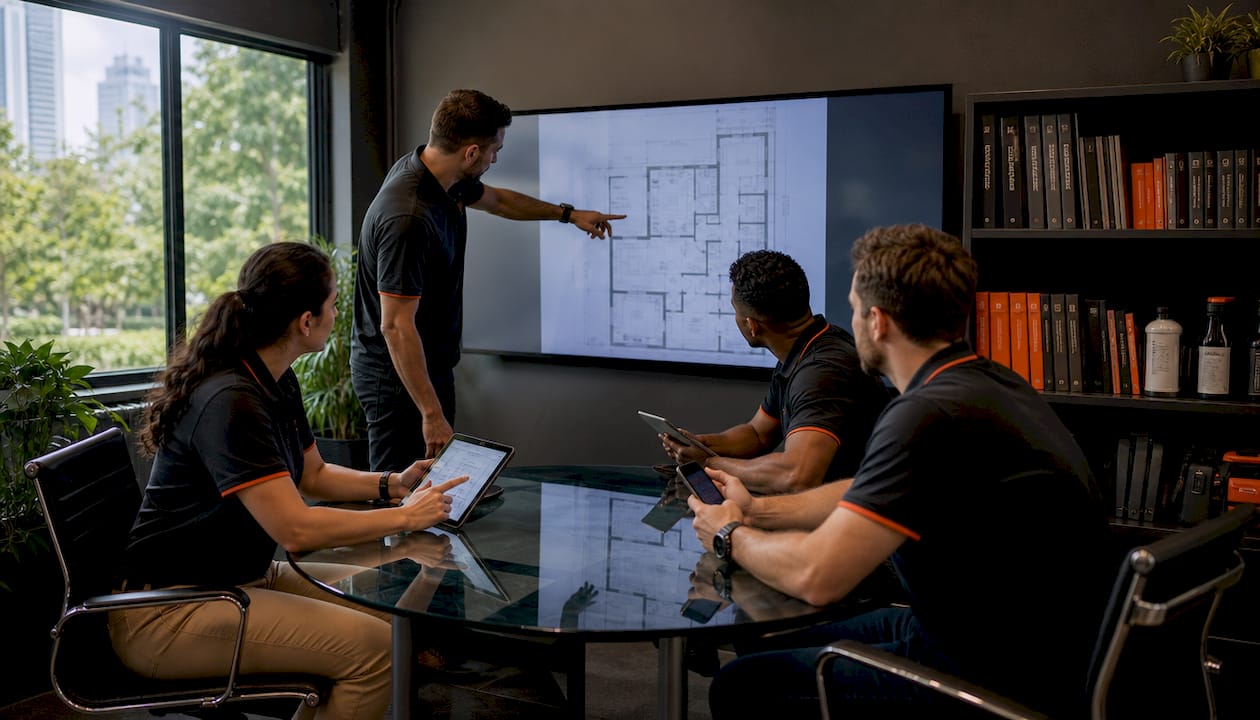
Logistical and legal complexity adds another layer of difficulty. Property managers must navigate tenant notification requirements, HOA board approvals, and local ordinances before any licensed applicator can begin work. Skipping these steps creates legal exposure and can void treatment warranties.
Key challenges specific to multi-unit buildings include:
- Shared structural elements such as common walls, subfloor framing, and utility chases that allow termite movement between units
- Tenant coordination requiring advance written notice, often 24–72 hours minimum depending on state law
- Staggered unit access when tenants refuse entry or are unavailable, leaving gaps in treatment coverage
- HOA or ownership disputes over cost-sharing when multiple owners share a building
Pro Tip: Before scheduling any treatment, walk the building with your pest control provider and map every shared structural element. This prevents missed zones and gives you documentation if a tenant disputes access.
What are the best termite treatment methods for multi-unit properties?
Four primary methods cover the range of termite treatment options available for multi-unit buildings. Each has a specific use case, cost profile, and displacement requirement.
Liquid soil barrier treatments
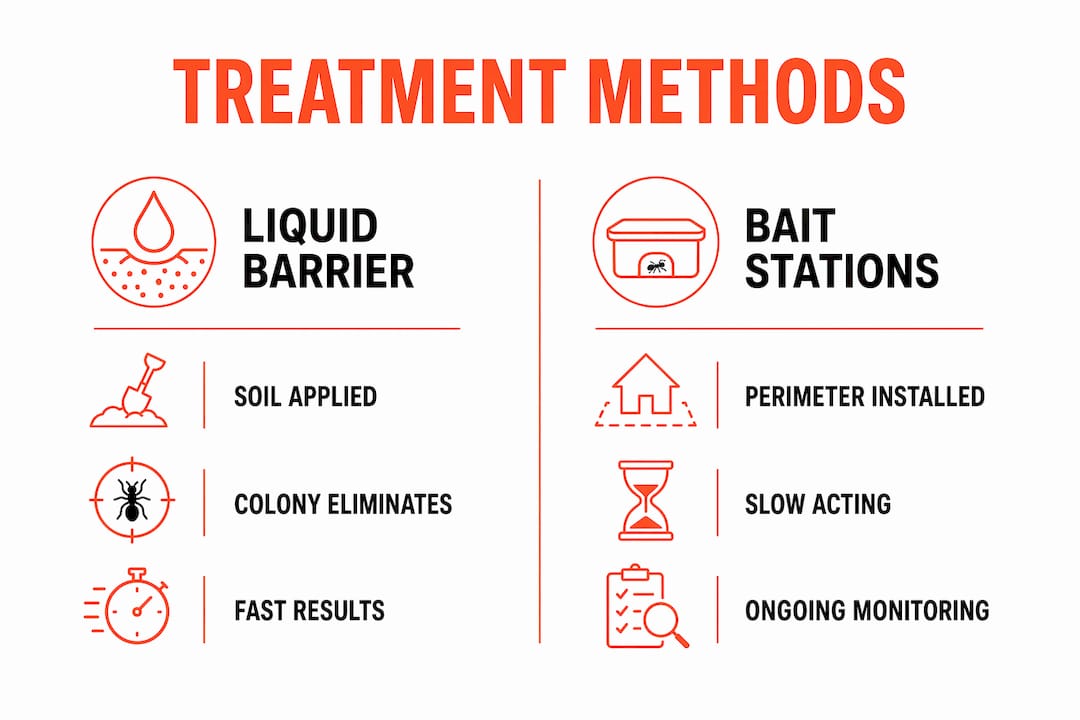
Liquid termiticide barriers applied to the soil around and beneath a foundation are the gold standard against subterranean termites. Liquid soil barriers achieve 95%–100% termite colony elimination within 90 days. That rate makes them the most reliable first-line option when subterranean species are confirmed. Residents typically do not need to vacate during application, which simplifies scheduling in occupied buildings.
Bait station systems
Bait stations are installed in the soil around the building perimeter. Termites carry the bait back to the colony, causing gradual collapse. Bait systems take 3–6 months for full colony collapse, which is slower than liquid barriers. Their strength is long-term monitoring. Technicians inspect stations on a regular schedule and can detect new activity before it becomes a full infestation. For property managers who want ongoing data on termite pressure, bait stations are the preferred monitoring tool.
Localized spot treatments
Spot treatments target visible termite activity in accessible wood. Localized treatments reach only accessible wood and lack the residual colony elimination effect needed in shared structures. They work for isolated, confirmed drywood termite activity in a single exposed beam or window frame, but they are not a substitute for building-wide treatment when infestation has spread through shared framing.
Whole-structure fumigation
Whole-structure fumigation using sulfuryl fluoride is often the only guaranteed method to eliminate drywood termites in buildings with inaccessible voids and shared framing. The gas penetrates every void, wall cavity, and structural member. The trade-off is significant: residents must vacate for 2–3 days, and professional fumigation costs $4–$8 per square foot. For a 10,000-square-foot building, that means $40,000–$80,000 in treatment costs. That figure sounds steep until you compare it to structural repair bills from an untreated drywood infestation.
Pro Tip: Ask your pest control provider to confirm the termite species before selecting a method. Subterranean termites respond well to liquid barriers; drywood termites in inaccessible voids often require fumigation. Misidentifying the species wastes money and time.
The table below summarizes how these methods compare across the factors that matter most to property managers.
| Method | Target species | Resident displacement | Timeframe to results | Monitoring benefit |
|---|---|---|---|---|
| Liquid soil barrier | Subterranean | None required | 90 days | Low |
| Bait stations | Subterranean | None required | 3–6 months | High |
| Spot treatment | Drywood (accessible) | None required | Immediate (limited) | None |
| Whole-structure fumigation | Drywood (all voids) | 2–3 days | Days | None |
How is multi-unit termite treatment coordinated and implemented?
Effective multi-unit termite treatment requires extensive logistical coordination including tenant notifications, scheduling, regulatory compliance, and property management cooperation. Failure at any one of these steps leads to delays, missed units, and possible legal exposure. The following sequence reflects best practice for property managers planning a building-wide treatment.
Commission a professional termite inspection. A licensed inspector surveys every accessible unit, crawl space, attic, and perimeter. The inspection report identifies species, infestation extent, and recommended methods. This document also serves as your legal record.
Select a treatment method based on species and building layout. Drywood termite infestations in inaccessible framing point toward fumigation. Subterranean infestations around the foundation point toward liquid barriers or bait systems.
Notify all tenants in writing. Most states require written notice at least 24 hours before treatment. Fumigation typically requires 48–72 hours notice plus temporary relocation assistance depending on local tenant protection laws.
Coordinate simultaneous unit access. Schedule all units on the same day or within the same treatment window. A single untreated unit can serve as a re-infestation source for the entire building.
Confirm regulatory compliance. Verify that your pest control provider holds a current state license and that all chemicals used comply with EPA registration requirements for occupied residential buildings.
Schedule a post-treatment inspection. A follow-up inspection at 30 and 90 days confirms colony elimination and catches any new activity before it spreads.
A well-run termite inspection and coordination process reduces the risk of missed units and gives you documentation for insurance claims or HOA disputes.
What ongoing strategies maintain termite protection in multi-unit buildings?
Treatment eliminates an active infestation. Prevention stops the next one. Integrated pest management (IPM) is the preferred framework for multi-unit termite control, emphasizing documented infestation thresholds, routine inspections, and ongoing monitoring contracts. IPM shifts the approach from reactive spraying to data-driven decisions based on actual infestation evidence.
Practical prevention measures that property managers can implement immediately include:
- Moisture control around foundations. Moisture management around foundations is vital to preventing new termite colonies and prolonging treatment effectiveness. Fix leaking irrigation lines, clear clogged gutters, and grade soil away from the building perimeter.
- Eliminate wood-to-soil contact. Wooden fence posts, deck supports, and landscape timbers that touch soil are direct termite entry points. Replace with concrete footings or pressure-treated alternatives.
- Maintain annual inspection contracts. Annual professional inspections catch new activity before it spreads across units. Many pest control providers offer multi-unit monitoring contracts that include bait station service and re-treatment guarantees.
- Conduct a full property maintenance review annually. Structural repairs, caulking gaps around utility penetrations, and replacing damaged wood all reduce termite entry points.
- Document everything. Keep inspection reports, treatment records, and tenant notifications in a single file. This protects you legally and makes future treatments faster to plan.
IPM contracts for multi-unit buildings focus on systematic inspections and threshold-based interventions rather than calendar-based spraying. That approach reduces chemical use and cuts long-term costs.
Key Takeaways
Coordinated, building-wide termite treatment is the only reliable method for multi-unit properties because termites move freely through shared structural elements, making isolated unit treatments a recurring and costly failure.
| Point | Details |
|---|---|
| Whole-building treatment is required | Treating individual units allows termites to reinfest through shared walls and framing. |
| Method depends on termite species | Liquid barriers suit subterranean termites; fumigation is necessary for drywood in inaccessible voids. |
| Coordination prevents legal exposure | Written tenant notifications and regulatory compliance must precede any treatment. |
| Fumigation requires resident displacement | Whole-structure fumigation costs $4–$8 per square foot and requires 2–3 days of vacancy. |
| IPM sustains long-term protection | Ongoing inspection contracts and moisture control prevent new colonies after treatment. |
What I’ve learned from treating multi-unit buildings
The most expensive mistake I see property managers make is waiting. A tenant reports termites in one unit, the manager treats that unit, and six months later three more units show damage. By then, the repair costs dwarf what a coordinated treatment would have cost upfront.
The second mistake is choosing a method based on price alone. DIY treatments range from $100 to $300, but they do not eliminate colonies in connected structures. That $200 savings turns into a $20,000 repair bill when shared framing gets compromised.
What actually works is treating the building as a single organism. Termites see it that way. Your treatment plan should too. That means a professional inspection first, species identification second, and a method chosen for the building’s specific layout and infestation type. Bait stations are excellent for long-term monitoring in subterranean-prone areas. Fumigation is non-negotiable when drywood termites have reached inaccessible voids.
The property managers who get the best outcomes are the ones who build a relationship with a licensed pest control provider before a crisis hits. Annual inspections and monitoring contracts cost a fraction of emergency fumigation. They also give you documentation that protects you with tenants, HOAs, and insurers.
— Arsenal
Arsenalexterminating serves multi-unit properties across Arizona
Property managers in Queen Creek, Gilbert, Chandler, Mesa, and surrounding Arizona communities trust Arsenalexterminating for coordinated termite inspections and treatments built for multi-unit buildings.

Arsenalexterminating offers professional termite inspections with no long-term contracts required, along with full-building treatment plans that cover liquid barriers, bait station monitoring, and fumigation coordination. The team handles tenant notification logistics, post-treatment follow-up, and ongoing monitoring contracts so property managers can focus on running their buildings. Arsenalexterminating’s HOA and multi-unit pest control plans are designed for the specific coordination demands of shared-structure properties. Contact Arsenalexterminating to schedule a free termite inspection for your property.
FAQ
What is multi-unit termite treatment exactly?
Multi-unit termite treatment is the coordinated process of treating all connected units in a residential building simultaneously to eliminate termite colonies and prevent spread through shared structural elements. It combines methods such as liquid soil barriers, bait stations, and whole-structure fumigation based on the termite species and building layout.
How much does multi-unit termite treatment cost?
Professional multi-unit treatments typically cost $1,200–$3,000, while whole-structure fumigation runs $4–$8 per square foot and requires 2–3 days of resident displacement. DIY options cost $100–$300 but do not eliminate colonies in connected structures.
Why can’t I just treat the affected unit?
Treating a single unit leaves termites free to move through shared walls, floor joists, and framing into adjacent units. A coordinated, whole-building approach is the only method that eliminates the colony rather than relocating it.
How long does termite treatment take in a multi-unit building?
Liquid soil barriers show 95%–100% colony elimination within 90 days. Bait station systems require 3–6 months for full colony collapse. Whole-structure fumigation takes 2–3 days of building vacancy but delivers immediate penetration of all voids.
How do I prevent termites from returning after treatment?
Integrated pest management contracts with annual inspections, bait station monitoring, and moisture control around the foundation are the most effective long-term prevention strategy for multi-unit residential buildings.
Recommended
- Free Termite Inspection | Expert Termite Control & Treatment
- Termite Removal Queen Creek | Termite Exterminator & Control
- About Arsenal Exterminating, Eco-friendly Pest Control
