



DIY pest control fails because it targets visible pests while leaving the hidden colony intact and actively reproducing. Most homeowners reach for a can of spray at the first sign of ants or roaches, which addresses symptoms rather than the source. The Federal Insecticide, Fungicide, and Rodenticide Act (FIFRA) governs what products reach store shelves, and retail formulations are intentionally limited in strength and scope. Integrated Pest Management (IPM), the standard recommended by the US EPA, requires a combination of exclusion, sanitation, and targeted treatment. Understanding why DIY pest control fails is the first step toward actually solving the problem.
Why DIY pest control fails: the most common mistakes
The single biggest reason DIY efforts fall short is misidentifying the pest. Wrong identification leads to wrong treatment, and the wrong treatment can delay control by weeks or even months while the population grows unchecked. A carpenter ant and a pavement ant look similar but require completely different baiting strategies. Treating the wrong species wastes time, money, and product.
The second major error is treating only what you can see. Visible pests represent less than 5% of the total infestation population. That means for every ant you see on your kitchen counter, dozens more are working inside wall voids, under flooring, and in structural spaces you never inspect.
Other common pest control mistakes include:
- Skipping exclusion steps. Spraying without sealing entry points guarantees reinfestation. Gaps around pipes, cracks in foundations, and torn door sweeps are open invitations.
- Ignoring sanitation. Food residue, standing water, and clutter are the real attractants. Removing them cuts off the colony’s support system.
- Using repellent sprays near bait stations. Repellent sprays near bait stations keep pests away from the poison designed to eliminate the colony. The two products work against each other.
- Applying too much product. Higher concentrations increase repellence without improving kill rates and raise health risks for your household.
- Overusing foggers. Foggers and widespread sprays can contaminate indoor air, build pest resistance, and scatter insects into new hiding places.
Pro Tip: Before buying any product, photograph the pest and compare it against university extension service identification guides. Your local Arizona cooperative extension office publishes free species guides specific to the Southwest.
Why consumer-grade products often fall short
Retail pest control products are formulated for convenience, not for established infestations. Retail products have lower chemical concentrations and are designed for small, isolated populations. A colony of 100,000 ants living inside your wall does not respond the same way a single scout ant on your countertop does.
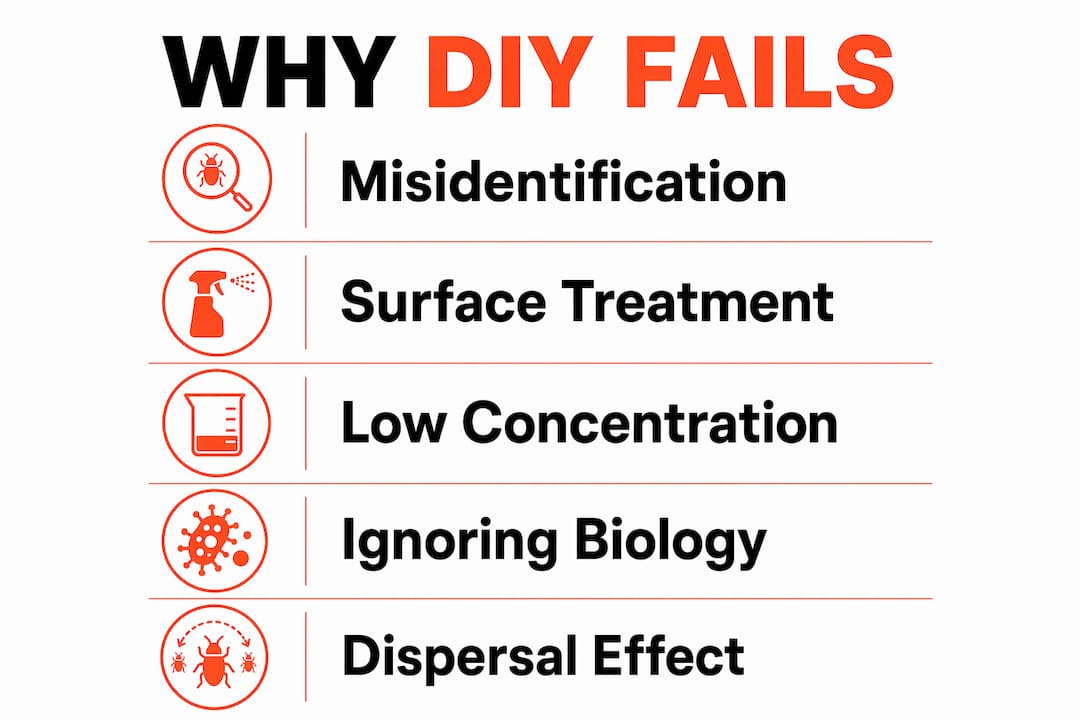
The chemistry matters as much as the concentration. Most store shelves carry pyrethroid-based products. Pyrethroids are repellent by nature, meaning pests detect them and avoid treated areas. That sounds useful, but it actually pushes the colony deeper into the structure rather than eliminating it.
Non-repellent chemicals like fipronil work differently. Fipronil allows pests to carry poison back to the colony unknowingly, killing workers, reproductives, and eventually the queen. Fipronil-based products are available in some retail formats, but professional-grade concentrations and application methods are far more effective at reaching the colony.
Key limitations of consumer products at a glance:
- Broad formulations. Retail products are designed to work on many species at once, which means they are optimized for none of them.
- No colony-level delivery. Most sprays kill on contact. They do not transfer through the colony the way professional baits do.
- Resistance buildup. Repeated use of the same chemical class, especially pyrethroids, accelerates resistance in local pest populations.
- Improper mixing. Doubling the concentration does not double effectiveness. It increases repellency and creates a FIFRA violation.
Pro Tip: Always read the product label before mixing. The label is a legal document under FIFRA. Applying at a higher rate than listed is illegal and counterproductive.
How pest biology explains why treatments fail
Most pests nest in places you never see. Wall voids, subfloor cavities, attic insulation, and structural wood are the preferred nesting sites for ants, roaches, rodents, and termites. The pests you observe foraging in your kitchen or bathroom are scouts or workers. They represent a fraction of the colony’s actual size.
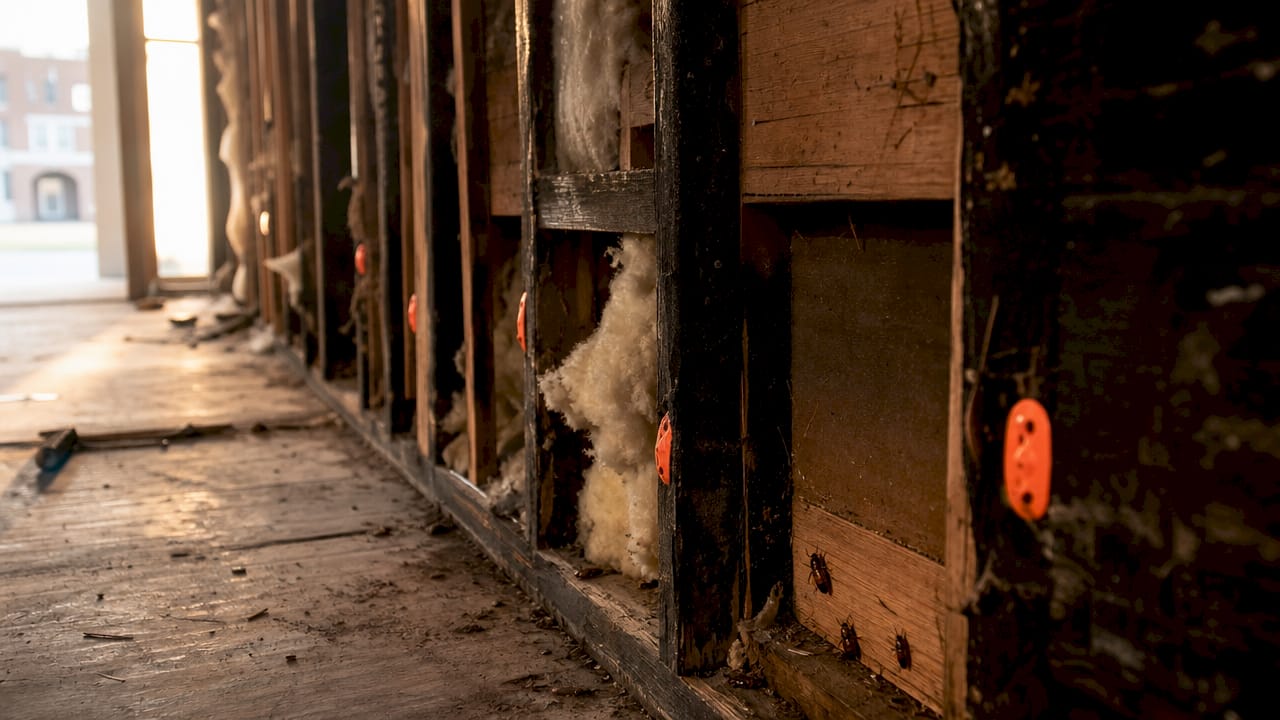
Understanding reproduction timelines changes how you think about treatment. Bed bug eggs and flea pupae survive most treatments because insecticides cannot penetrate the egg casing. A single treatment feels like success for a week or two, then the next generation hatches and the infestation returns at full strength. Effective control requires multiple timed treatments that account for the full life cycle.
Ant colonies present a specific challenge called budding. When a colony feels threatened by a repellent spray, it splits. The queen and a group of workers relocate to a new area of the home and start a new satellite colony. One infestation becomes two. This is the dispersal effect in action, and it is one of the most common reasons a DIY attempt makes things measurably worse.
Here is how pest behavior undermines typical DIY approaches:
- Foragers are expendable. Killing visible workers does not threaten the queen or the colony’s reproductive capacity.
- Repellent products trigger relocation. The colony moves rather than dies, spreading the infestation to new zones.
- Eggs are chemically protected. No contact insecticide penetrates an egg casing, so a second or third treatment is always necessary.
- Nesting sites are inaccessible. Without professional equipment, you cannot deliver product to where the colony actually lives.
- Timing matters. Treating at the wrong point in the pest’s life cycle wastes product and gives the population time to recover.
Professional methods exploit pest behavior rather than fight it. Non-repellent baits and slow-acting chemicals allow pests to move freely through treated zones, pick up a lethal dose, and carry it back to the nest before dying.
When should you stop trying DIY and call a professional?
Some infestations are beyond the reach of any retail product, regardless of how carefully you apply it. Termites, bed bugs, and rodents require professional equipment and specialized knowledge. Delaying professional help with these pests leads directly to structural damage, contamination, and significantly higher treatment costs.
Signs your DIY attempt has failed and professional help is needed:
- Activity continues after two full treatment cycles. If pests are still visible two weeks after your second treatment, the colony is established and resistant to your approach.
- You find structural damage. Termite galleries, gnawed wiring, or hollowed wood mean the infestation has been active long enough to cause real harm. Termite removal requires licensed equipment and follow-up inspections.
- Pests appear in new areas. Spread to new rooms signals the dispersal effect. The infestation is growing, not shrinking.
- You cannot locate the nest. Without finding and treating the source, surface sprays only delay the inevitable.
- Stinging insects are involved. Bee colonies and wasp nests inside wall voids require specialized removal. Attempting to seal them in causes secondary problems and poses serious safety risks.
The EPA’s IPM framework prioritizes prevention first: sealing entry points, eliminating moisture sources, and removing food access. When treatment is necessary, IPM calls for targeted applications at the lowest effective dose. This approach reduces chemical exposure, prevents resistance, and delivers lasting results. It is the standard that licensed pest management professionals train following.
DIY can work for very early-stage infestations if the pest is correctly identified, the right product is applied precisely, and exclusion steps are completed. For anything beyond a localized, early-stage problem, professional intervention is the faster and cheaper path to resolution.
Key Takeaways
DIY pest control fails because it treats visible symptoms while leaving hidden colonies intact, and consumer products lack the chemistry and delivery methods needed to reach the source.
| Point | Details |
|---|---|
| Visible pests are a small fraction | Less than 5% of an infestation is visible; the colony lives in walls and subfloor spaces. |
| Repellent sprays spread infestations | The dispersal effect causes colonies to split and relocate, worsening the problem. |
| Retail products have real limits | Lower concentrations and broad formulations cannot eliminate established or resistant colonies. |
| Pest biology defeats single treatments | Eggs survive insecticides, so multiple timed treatments are required for full control. |
| IPM is the professional standard | The EPA’s Integrated Pest Management approach combines exclusion, sanitation, and targeted treatment for lasting results. |
What I’ve learned from watching DIY attempts go wrong
Homeowners consistently underestimate two things: how large the infestation actually is, and how much pest behavior works against surface treatments. I have seen situations where a homeowner spent months and hundreds of dollars on retail sprays, only to find the colony had spread from one wall to three. The spray gave them a false sense of progress because the visible pest activity dropped temporarily. The colony was simply regrouping.
DIY is not worthless. For a single ant trail appearing in spring before a colony establishes, a correctly applied non-repellent bait with sealed entry points can stop the problem early. The key phrase is “correctly applied.” Most homeowners grab the nearest repellent spray, apply too much, and trigger exactly the dispersal response they were trying to prevent.
The safety concern is real and underappreciated. Overusing foggers or mixing concentrates above label rates does not just fail to work. It contaminates your living space and creates resistance in the local pest population, making future professional treatments harder. Following FIFRA label instructions is not optional fine print. It is the difference between a treatment that works and one that backfires.
My honest advice: use DIY for prevention and early-stage problems. Use professionals for anything established, structural, or involving termites, bed bugs, rodents, or stinging insects. Knowing where that line is saves you time, money, and a lot of frustration.
— Arsenal
Arsenalexterminating protects your home with expert pest control
Persistent pests need more than a spray from the hardware store. Arsenalexterminating uses professional-grade IPM methods to locate and eliminate infestations at the source, not just the surface.

Arsenalexterminating serves Queen Creek, San Tan Valley, Florence, Gilbert, Chandler, Mesa, Apache Junction, and surrounding Arizona communities. The team handles everything from residential pest control and termite inspections to scorpion control and bee removal, with no long-term contracts and environmentally responsible treatments. If your DIY attempts have not delivered lasting results, Arsenalexterminating offers inspections and targeted treatment plans built around your specific pest and property. Learn more about the eco-friendly approach that sets Arsenalexterminating apart from generic spray-and-pray services.
FAQ
Why do store-bought sprays keep failing?
Retail sprays are repellent-based and kill only on contact. They push colonies deeper into walls rather than eliminating the queen and reproductives, so the infestation returns.
What pests always need a professional?
Termites, bed bugs, rodents, and stinging insects like bees and wasps require professional equipment and knowledge. DIY attempts on these pests risk structural damage and increased costs.
What is the dispersal effect?
The dispersal effect occurs when repellent sprays cause a pest colony to fragment and relocate to new areas of the home. It turns one infestation zone into several.
How does IPM differ from standard DIY pest control?
Integrated Pest Management, recommended by the US EPA, combines exclusion, sanitation, and targeted low-dose treatments. Standard DIY relies on reactive spraying without addressing the root causes.
How do I know my DIY treatment has failed?
If pest activity continues after two full treatment cycles, pests appear in new rooms, or you find structural damage, the infestation is established and requires professional intervention.
Recommended
- Homeowners Association Pest Control in Queen Creek, Arizona
- Pest Control Services Queen Creek, AZ | Arsenal Exterminating
- About Arsenal Exterminating, Eco-friendly Pest Control
Article generated by BabyLoveGrowth
