



Quarterly pest service is a scheduled pest control program performed four times a year, approximately every 90 days, designed to prevent infestations through regular inspections and targeted barrier treatments. Unlike one-time sprays or emergency calls, this approach aligns each visit with seasonal pest behavior, so your property stays protected year-round. Pest management professionals consider it the gold standard for routine residential and commercial maintenance. Arsenalexterminating offers this type of recurring program across Queen Creek, Mesa, Gilbert, Chandler, and surrounding Arizona communities, tailoring each visit to local pest pressures and property conditions.
What is quarterly pest service and what does it include?
Quarterly pest control is performed approximately every 90 days, aligning each visit with the predictable shifts in pest seasonal activity. That timing is not arbitrary. Professional-grade treatment products degrade over roughly 60–90 days, so a quarterly schedule keeps the protective barrier active without gaps.
A standard visit covers far more than spraying the baseboards. Here is what a typical quarterly service includes:
- Exterior perimeter inspection: The technician walks the full perimeter, checking for cracks, gaps, and moisture issues that invite pests inside.
- Entry point sealing: Gaps around pipes, doors, and utility lines are identified and flagged or sealed to cut off pest access routes.
- Targeted indoor spot treatments: Rather than broad chemical applications, spot treatments indoors focus on active areas like under sinks, in corners, and along wall voids.
- Seasonal pest removal: Wasp nests, spider webs, and similar seasonal hazards are cleared during each visit.
- Structural monitoring: Technicians note signs of water damage, wood decay, or other conditions that support pest activity.
- Free re-service calls: Most quarterly plans include return visits between scheduled appointments at no extra charge if pest activity resurfaces.
The inspection component is often the most underappreciated part of the service. Routine inspections regularly uncover hidden structural problems, such as slow leaks or deteriorating weatherstripping, that homeowners did not know existed. Catching those issues early prevents far larger repair bills later.
Pro Tip: Ask your technician to walk you through any structural findings after each visit. That five-minute conversation often reveals maintenance priorities you would otherwise miss for years.

Why is quarterly pest control more effective than one-time treatments?
A single pest treatment has a clear expiration date. Most professional-grade products remain effective for 60–90 days before breaking down. After that window closes, your property has no active barrier, and pests move back in freely.
Quarterly scheduling solves that problem by refreshing the barrier before it fails. Pest management experts consider quarterly service the gold standard for routine maintenance because it matches both the degradation timeline of treatments and the biological realities of pest life cycles. Disrupting pests at each seasonal transition prevents them from establishing breeding populations.
The cost argument is equally strong. Annual costs for comprehensive quarterly plans average $300–$400, including free re-service visits. A single emergency treatment for an active infestation can cost $150–$300 per incident, and that figure does not include structural repairs if the infestation caused damage. Quarterly service functions as preventive insurance.
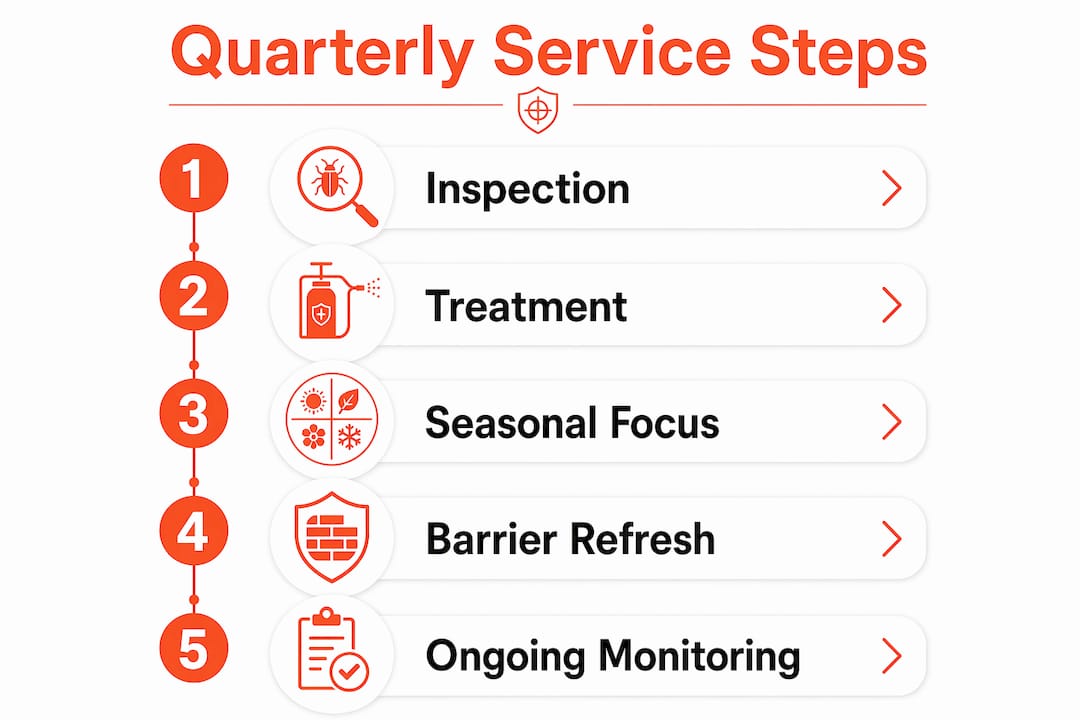
One misconception trips up many homeowners: they expect immediate, dramatic results after the first visit. Full protection actually requires 6–9 months of consistent service, roughly 2–3 quarterly cycles, to flush out established pest populations and build a stable defensive barrier. Pest activity may even appear to increase briefly after the first treatment as displaced pests become more visible. That is a normal part of the process, not a sign the service is failing.
Pro Tip: Stick with the program through the first three visits before evaluating results. The cumulative effect of multiple cycles is what delivers lasting protection, not any single application.
Regular pest control checks also catch infestations at their earliest stage, when treatment is fastest and least expensive. Waiting until you see a problem means the population is already established.
Which pests does quarterly service target, and how does the schedule address seasonal behavior?
Quarterly pest control addresses a wide range of common household pests. The specific focus shifts with each season to match what is actually active and threatening your property at that time of year.
Spring (march through may): Ant colonies become active and begin foraging aggressively. Spider populations emerge and start building webs around entry points. Spring treatments target these pests at the start of their active season before populations grow.
Summer (june through august): Wasp and hornet activity peaks, creating safety hazards around eaves and outdoor spaces. Mosquito populations surge with standing water. Seasonal treatments during summer focus on these threats, including nest removal and perimeter barrier reinforcement.
Fall (september through november): Rodents begin seeking warm shelter as temperatures drop. Fall visits prioritize rodent prevention, sealing entry points and placing monitoring stations before mice and rats move indoors for winter.
Winter (december through february): Overwintering insects, cockroaches, and indoor pests become the focus. Technicians inspect interior hotspots like attics, crawl spaces, and utility rooms where pests shelter during cold months.
The full list of pests covered under quarterly pest control schedules includes ants, spiders, wasps, rodents, cockroaches, and mosquitoes, with treatment emphasis adjusted for local climate and regional pest cycles. In Arizona, that means scorpion activity also factors into warm-weather visits, given the year-round pressure in communities like Queen Creek and San Tan Valley.
| Season | Primary pest threats | Treatment focus |
|---|---|---|
| Spring | Ants, spiders | Perimeter barrier, entry point sealing |
| Summer | Wasps, mosquitoes | Nest removal, outdoor treatment zones |
| Fall | Rodents | Entry point sealing, monitoring stations |
| Winter | Cockroaches, overwintering insects | Interior hotspot inspections, crack treatments |
Is quarterly pest control the right choice for your property?
Not every property carries the same pest risk. The right service frequency depends on your specific situation. Quarterly service is the best fit for most homeowners, but a few factors help confirm that decision.
Properties with moderate to high pest risk benefit most from quarterly scheduling. Risk factors include:
- Location near natural areas: Homes adjacent to desert washes, wooded lots, or open fields face constant pest pressure from wildlife and insects moving through those corridors.
- Older construction: Homes built before modern building codes have more gaps, aging weatherstripping, and deteriorating foundations that create easy pest entry points.
- Moisture problems: Leaky pipes, poor drainage, or high humidity attract cockroaches, ants, and termites at a much higher rate than dry, well-maintained properties.
- Previous infestations: A history of pest problems is the strongest predictor of future activity. Quarterly service breaks that cycle before it repeats.
- Families with children and pets: Targeted spot treatments used in quarterly programs are safer than broad chemical applications, making them a better fit for households with young children or animals.
Property managers and landlords have an additional reason to prioritize quarterly service. Consistent pest maintenance protects tenant health, reduces liability, and preserves property value. A documented pest control maintenance schedule also satisfies HOA requirements in many Arizona communities.
Low-risk properties, such as newer construction in urban areas with no pest history, may do well with semi-annual inspections. However, most Arizona homeowners face enough year-round pest pressure that quarterly service delivers clear value. Consulting a pest professional for a property-specific assessment is the most reliable way to determine the right schedule for your situation.
Regular pest maintenance steps between professional visits, like eliminating standing water and sealing food containers, also reduce pressure on your property and help the quarterly program work more effectively.
Key Takeaways
Quarterly pest service is the most cost-effective and reliable method for preventing infestations, because it aligns treatment timing with seasonal pest cycles and refreshes protective barriers before they fail.
| Point | Details |
|---|---|
| Service frequency | Treatments occur every 90 days, matching the degradation timeline of professional-grade products. |
| What’s included | Each visit covers exterior inspections, entry point sealing, targeted spot treatments, and seasonal pest removal. |
| Cost advantage | Annual plans average $300–$400 and include free re-service calls, undercutting the cost of emergency treatments. |
| Time to full protection | Expect 6–9 months and 2–3 service cycles before maximum pest barrier effectiveness is achieved. |
| Best candidates | Properties near natural areas, older homes, and those with pest history benefit most from quarterly scheduling. |
What I’ve learned after years of quarterly pest service in Arizona
Most homeowners think pest control is about chemicals. After working with properties across Queen Creek, Mesa, and the surrounding desert communities, I can tell you the inspection is where the real value lives.
Time and again, a quarterly visit uncovers a slow leak under a bathroom vanity or a gap behind a dryer vent that the homeowner had no idea existed. Those structural conditions are what drive pest activity far more than any seasonal weather shift. Fix the conditions, and the treatments work dramatically better.
The other thing I see constantly is homeowners canceling service after the first or second visit because they still spot a few ants. That is exactly the wrong time to stop. The first cycle disrupts the population. The second cycle shrinks it. The third cycle is when you start seeing the sustained results that make quarterly service worth every dollar. Reactive pest control, calling for help only when you see a problem, almost always costs more in the long run and delivers far less peace of mind.
If your property is in the Arizona desert, quarterly service is not a luxury. It is the baseline for keeping scorpions, rodents, and ants from treating your home as their own.
— Arsenal
Arsenalexterminating’s quarterly pest control for Arizona homeowners
Arsenalexterminating serves homeowners and property managers across Queen Creek, San Tan Valley, Florence, Gilbert, Chandler, Mesa, and Apache Junction with eco-friendly quarterly pest control built around seasonal Arizona pest cycles.

Each quarterly visit includes a full exterior inspection, targeted treatments, and seasonal pest removal with no long-term contracts required. If pest activity returns between scheduled visits, Arsenalexterminating returns at no additional charge. The team specializes in scorpion control, rodent prevention, ant control, bee removal, and more, all using environmentally responsible products safe for families and pets. Contact Arsenalexterminating to schedule a free evaluation and find the right pest control plan for your property.
FAQ
What is quarterly pest service in simple terms?
Quarterly pest service is a recurring pest control program scheduled four times a year, approximately every 90 days, that combines property inspections and targeted treatments to prevent infestations before they start.
How long does it take for quarterly pest control to work?
Full protection typically requires 6–9 months of consistent service, covering 2–3 quarterly cycles, to eliminate established pest populations and build a stable protective barrier around your property.
What pests does a quarterly plan cover?
Most quarterly plans address ants, spiders, wasps, rodents, cockroaches, and mosquitoes, with seasonal adjustments targeting whichever pests are most active during each visit period.
Is quarterly pest control worth the cost?
Annual costs for comprehensive quarterly plans average $300–$400 and include free re-service calls, making them more cost-effective than paying $150–$300 per emergency treatment after an infestation is already established.
How is quarterly service different from a one-time treatment?
A one-time treatment loses effectiveness after 60–90 days and leaves your property unprotected after that window. Quarterly service refreshes the barrier before it degrades, maintaining continuous protection through every seasonal pest cycle.
Recommended
- Homeowners Association Pest Control in Queen Creek, Arizona
- Pest Control in Queen Creek | Home & Commercial pest removal
- Pest Control & Extermination | Arsenal Exterminating
- Service Area – Arsenal Exterminating Pest Control Services
