


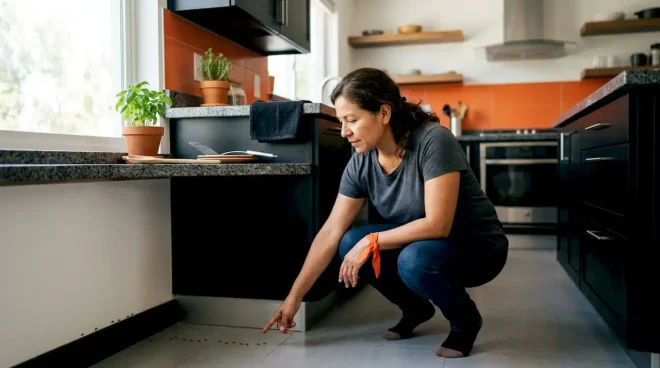
One-time pest treatment is a reactive, single-visit service that targets an active, isolated infestation without requiring a contract or ongoing commitment. It covers the three core steps of professional pest control: inspection, targeted application, and prevention recommendations. For homeowners dealing with a sudden ant trail in the kitchen or a wasp nest near the back door, this type of service delivers fast relief. Understanding what it includes, what it costs, and when it falls short helps you choose the right pest control option from the start.
What is one-time pest treatment and how is it defined?
One-time pest treatment is the industry term for a single-visit, reactive pest control service. Technicians arrive, inspect the problem area, apply a targeted pesticide treatment, and leave you with recommendations. There is no follow-up schedule and no recurring charge. The service typically covers common household pests including ants, spiders, roaches, and wasps.
Cost is one of the first questions homeowners ask. A typical general service call averages around $170, while specialized treatments like bee or wasp nest removal average about $525. Termite treatments run higher, ranging from $240 to $1,000 depending on the extent of the problem. These figures give you a realistic baseline before you call anyone.
The key distinction from a recurring plan is intent. A single treatment reacts to a problem that already exists. It does not build a chemical barrier around your home or adjust treatment seasonally. That reactive nature is both its strength and its limitation.
Which pests and situations are best suited for a single treatment?
One-time treatments work best for small, clearly identifiable, or seasonal pest problems. A nest of paper wasps on your porch, a roach spotted after a neighbor’s renovation, or a seasonal ant surge in spring are all good candidates. These are isolated events with a clear source and a defined scope.
Situations where a single treatment fits well:
- A wasp or bee nest in a specific location on your property
- An ant infestation that appeared suddenly after rain or landscaping work
- Spiders concentrated in one area like a garage or crawl space
- A roach sighting tied to a specific entry point or food source
- Seasonal pest pressure that spikes once a year and then fades
Chronic infestations are a different story. Termites, bed bugs, and German cockroaches almost always require multi-step treatment plans. Technicians often find that what looks like a simple one-time problem is actually a deeper infestation that needs a more extensive approach once they inspect closely. Property location also matters. Homes near desert washes, dense vegetation, or standing water face higher pest pressure and typically benefit more from ongoing protection.
Pro Tip: If you are unsure whether your infestation is isolated or chronic, ask the technician to assess the scope during the inspection before committing to any service type.
How does a one-time pest control visit typically work?
A professional one-time visit follows a structured process. Knowing what to expect helps you prepare your home and get the most from the service.
- Inspection. The technician walks the interior and exterior of your home to locate pest activity, entry points, and conditions that attract pests. This step determines where and how treatment is applied.
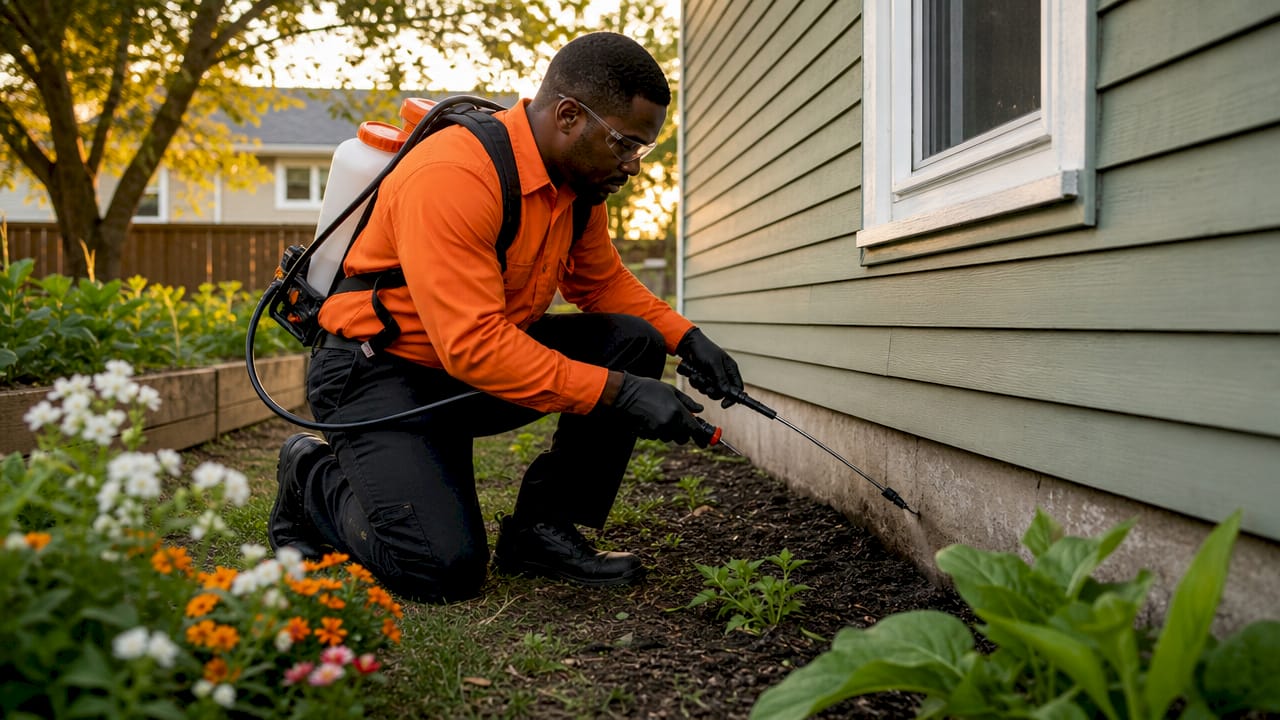
- Targeted application. The technician applies pesticide to active areas and known entry points. Products are chosen based on the pest type and the location of activity, whether that is a crack-and-crevice spray for roaches or a perimeter treatment for ants.
- Recommendations. You receive specific advice on what to fix or change to reduce the chance of pests returning. This might include sealing a gap near a pipe, removing a wood pile, or fixing a leaky faucet.
- No follow-up schedule. The visit ends there. There is no automatic return appointment, no seasonal check-in, and no ongoing monitoring.
The absence of follow-up is the defining feature of this service type. It also means the results depend heavily on what you do after the technician leaves. A thorough home inspection is the foundation of any effective treatment, and skipping or rushing it reduces the accuracy of the application.
What are the advantages and limitations of one-time pest treatments?
One-time pest control has real advantages for the right situation. It also has hard limits that homeowners need to understand before choosing it.
Advantages worth knowing
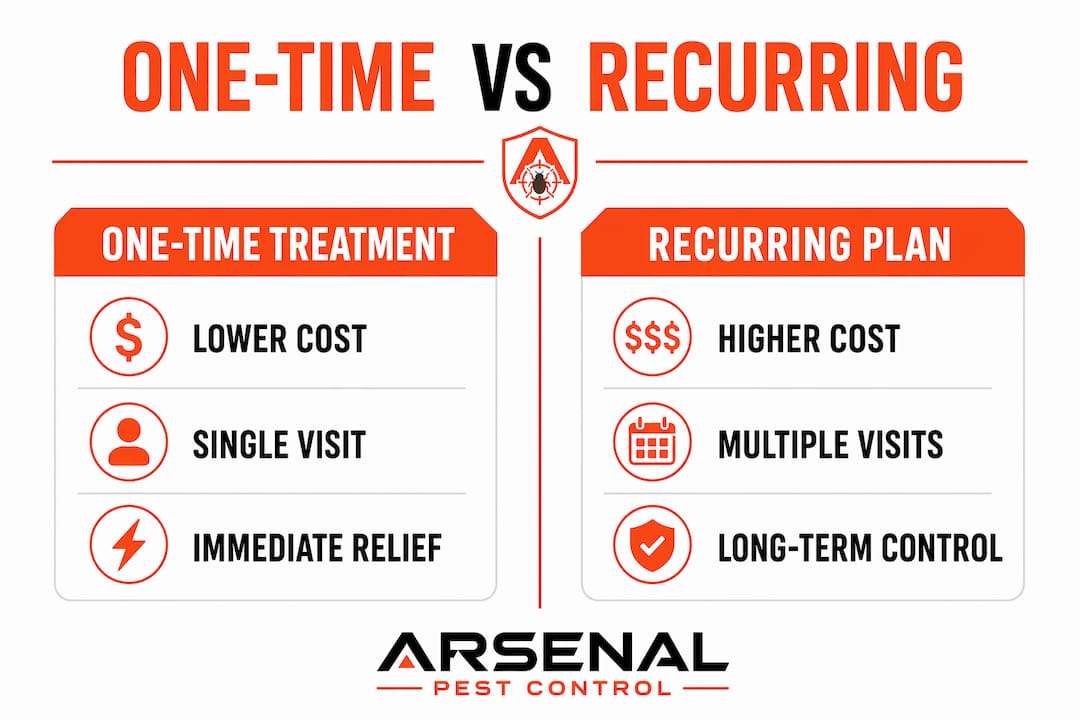
The most obvious benefit is cost. You pay once, with no monthly or quarterly fees. There is no contract to sign and no cancellation penalty. For renters or homeowners dealing with a short-term or isolated problem, this flexibility is genuinely useful. The service also delivers immediate relief. A technician can often arrive within days and eliminate the active pest problem the same day.
Limitations that matter
One-time treatments provide immediate relief but do not guarantee permanent elimination unless the underlying conditions are corrected. Moisture problems, open entry points, and food sources will draw pests back regardless of what was sprayed. Chemical applications also lose effectiveness over time. Without follow-up treatments, the protective effect fades.
| Factor | One-time treatment | Recurring plan |
|---|---|---|
| Upfront cost | Lower | Higher |
| Contract required | No | Usually yes |
| Ongoing protection | No | Yes |
| Seasonal adjustment | No | Yes |
| Best for | Isolated infestations | Chronic or high-risk properties |
Pro Tip: Non-chemical exclusion work, like sealing entry points with steel wool or installing door sweeps, often delivers longer-lasting results than a chemical spray alone. Ask your technician which structural fixes matter most for your home.
How do you decide between a one-time treatment and an ongoing plan?
The fundamental difference between these two pest control options is intent. A single treatment reacts to a current problem. A recurring plan prevents future ones. Choosing between them comes down to four factors: infestation scope, pest type, property risk, and budget.
Early detection favors a one-time approach. If you catch a pest problem quickly, before it spreads or establishes a colony, a single targeted treatment is often enough. Chronic issues, high-risk properties, and pests with complex life cycles almost always need a maintenance plan to stay ahead of reinfestation.
| Situation | Best approach |
|---|---|
| First-time ant surge after rain | One-time treatment |
| Recurring roach problem over multiple months | Ongoing plan |
| Wasp nest in a specific location | One-time treatment |
| Home near desert wash or dense vegetation | Ongoing plan |
| Seasonal spider activity in one area | One-time treatment |
| Termite activity detected | Specialized multi-step treatment |
| Bed bug infestation | Multi-step treatment plan |
Cost-effectiveness depends on pest type, infestation severity, and property risk. Recurring plans cost more upfront but reduce long-term property damage risk, particularly for pests like termites that cause structural harm over time. For homeowners in Queen Creek, San Tan Valley, or other Arizona communities where scorpions and bark scorpions are a year-round concern, a local pest control plan built around your specific risk profile makes more financial sense than repeated one-time calls.
What should you do after a one-time pest treatment?
A professional treatment gives you a head start. What you do in the days and weeks after determines whether the pests stay gone. One-time treatments act mainly as a reactive measure and rarely address the environmental or structural causes that allow pests to return. You need to close those gaps yourself.
Practical steps to reduce pest recurrence:
- Clean and declutter. Remove cardboard boxes, food debris, and clutter from garages, pantries, and storage areas. Pests need shelter to survive between treatments.
- Seal entry points. Caulk gaps around pipes, windows, and baseboards. Install door sweeps on exterior doors. Steel wool works well for larger gaps that caulk cannot fill.
- Manage moisture. Fix leaky pipes, clear clogged gutters, and eliminate standing water in the yard. Moisture attracts cockroaches, silverfish, and mosquitoes. Good water damage prevention practices around your home also reduce the damp conditions that pests favor.
- Store food properly. Use airtight containers for dry goods and pet food. Empty trash cans regularly and keep lids secure.
- Maintain your yard. Trim vegetation away from the house, remove wood piles from against the foundation, and keep mulch thin near the perimeter.
Integrated Pest Management (IPM) principles prioritize removing food, water, and shelter before reaching for chemicals. Synthetic sprays offer short-term results. Structural and sanitation changes deliver lasting ones. A thorough home cleaning routine that removes grease, crumbs, and clutter is one of the most underrated pest prevention tools available to homeowners.
Key Takeaways
One-time pest treatment works best for isolated, clearly defined infestations and delivers immediate relief, but it requires follow-up prevention work to stop pests from returning.
| Point | Details |
|---|---|
| Definition | A single-visit, reactive service covering inspection, targeted application, and recommendations. |
| Best use case | Isolated or seasonal infestations like wasp nests, ant surges, or first-time roach sightings. |
| Cost baseline | General service calls average around $170; specialized treatments like bee removal average $525. |
| Key limitation | No follow-up or ongoing barrier means pests can return if conditions are not corrected. |
| After-treatment priority | Seal entry points, manage moisture, and apply IPM principles to extend the treatment’s effectiveness. |
What I’ve learned about when one-time treatments actually work
After years of treating homes across Queen Creek, Gilbert, and the San Tan Valley, I’ve seen one-time treatments succeed and fail in predictable ways. They succeed when the homeowner caught the problem early, the pest has a clear source, and the property conditions are not actively inviting reinfestation. They fail when the homeowner expected a spray to solve a structural problem.
The most common mistake I see is treating a symptom without addressing the cause. A technician can eliminate the ants you see today. If there is a moisture problem under your sink or a gap behind your dishwasher, more ants will find it within weeks. The chemical did its job. The environment undid it.
My honest recommendation: use a one-time treatment as a first response to a specific, contained problem. Combine it with at least two or three of the exclusion and sanitation steps listed above. If the same pest returns within 60 days, that is your signal that the problem is deeper than a single visit can fix. At that point, a maintenance plan is not an upsell. It is the right tool for the job.
Realistic expectations matter more than any product or technique. A one-time treatment is not a guarantee. It is a strong start.
— Arsenal
Pest control options from Arsenalexterminating, built around your situation
Arsenalexterminating offers both one-time treatments and ongoing residential pest control plans for homeowners across Queen Creek, Mesa, Chandler, and surrounding Arizona communities. There is no pressure to sign a long-term contract. If a single visit is the right call, that is what we recommend.

For homeowners who need more than a one-time fix, Arsenalexterminating’s maintenance plans include seasonal adjustments, continuous barrier protection, and eco-friendly treatment methods. Every service starts with a thorough inspection so you get a recommendation based on your actual situation, not a default package. Learn more about our pest control approach or reach out to schedule a visit.
FAQ
What does a one-time pest treatment include?
A one-time pest treatment includes a home inspection, targeted pesticide application to active pest areas, and expert recommendations for reducing future pest activity. It does not include follow-up visits or ongoing monitoring.
Is one-time pest control effective?
One-time pest control is effective for isolated or seasonal infestations when the source is identifiable and conditions are not actively conducive to reinfestation. Chronic infestations or high-risk properties typically need recurring treatment plans for lasting results.
How long does a one-time pest treatment last?
The residual effect of a single treatment varies by product and pest type, but most chemical applications lose effectiveness within weeks to a few months. Without follow-up treatments or structural fixes, pests can return once the product breaks down.
What pests are not suited for a one-time treatment?
Termites, bed bugs, and German cockroaches are not well-suited for single-visit treatment. These pests have complex life cycles and established colonies that require multi-step, often multi-visit treatment protocols to eliminate fully.
How much does a one-time pest treatment cost?
A general one-time pest control service averages around $170. Specialized treatments like bee or wasp nest removal average about $525, while termite treatments range from $240 to $1,000 depending on the severity and scope of the infestation.
Recommended
- Pest Control & Extermination | Arsenal Exterminating
- Home new – Arsenal Exterminating Pest Control Services
- Homeowners Association Pest Control in Queen Creek, Arizona
